
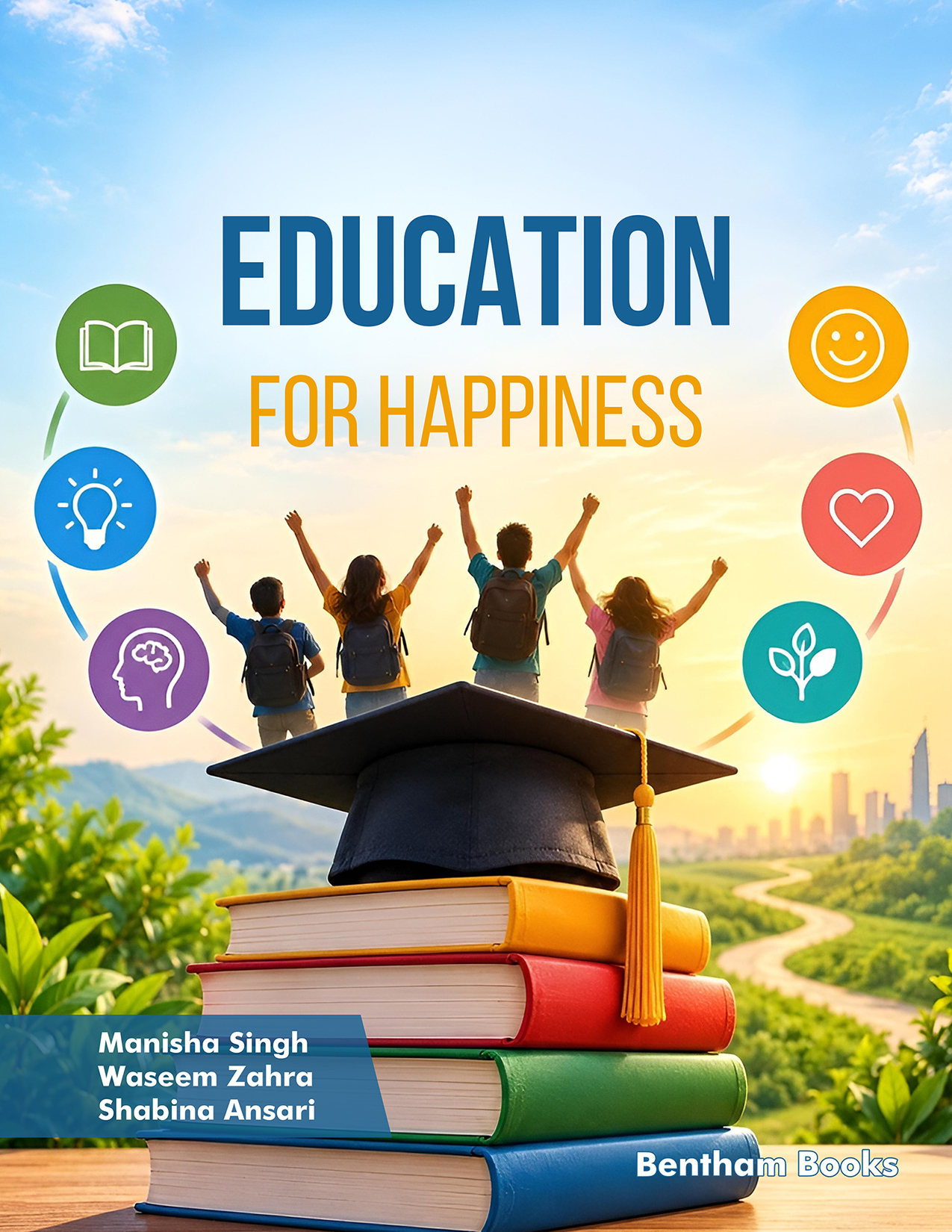
Education for Happiness

Authors: Manisha Singh, Waseem Zahra, Shabina Ansari

Education for Happiness

ISBN: 979-8-89881-787-9
eISBN: 979-8-89881-786-2 (Online)

Introduction

Education for Happiness asks what education should ultimately enable people to become and whether happiness deserves a place among its central aims. Moving past narrow ideas of happiness as pleasure, it treats the concept as multidimensional encompassing well-being, ethical living, self-realisation and meaningful relationships. Bringing Eastern and Western philosophy into dialogue, with particular attention to Indian thought, the book connects these ideas to educational purpose, pedagogy and whole-person development, then moves into practice through innovative pedagogies, Bhutan's happiness education model and emerging happiness centres worldwide.


Key Features

  • - Dialogue between Eastern and Western philosophical traditions on happiness.
  • - Sustained focus on Indian philosophical thought and thinkers.
  • - Bridges philosophical theory with classroom-level educational practice.
  • - Case study of Bhutan's happiness education approach.
  • - Survey of global happiness-centre initiatives.

Target Readership :

B.Ed./M.Ed. students, teacher educators, education and philosophy scholars, plus teachers, administrators and policymakers.

Foreword

The book in hand, "Education for Happiness," is a seminal work of its kind that addresses a subtle as well as a critical contemporary issue of happiness with reference to Education. In an era of digital footprints that is increasingly dominated by unhealthy and throat-cut competition and the pursuit of success and external validation, the concept of education for happiness presents a quintessential and refreshing perspective. This book invites all of us, having unflinching faith in happiness as one of the ultimate goals of Education, to reconceptualize education not merely as a pathway to academic success but as a crucial mechanism for promoting emotional well-being, self-awareness, and resilience. While society at large often equates happiness with external achievements validated by others, genuine happiness emanates from within—a truth that education, when thoughtfully conceived, structured, and implemented, can facilitate not only true happiness validated by oneself but also a kind of bliss. It can nourish and nurture vital life-forces and skills such as emotional intelligence, mindfulness, and empathy, which are frequently undermined in career- and success-oriented educational frameworks.

This work explores various shades of happiness, offering readers an opportunity to sharpen their understanding and engage deeply with the conceptual as well as operational aspects. It serves as a beaconing light for educators, parents, and policymakers who acknowledge that academic learning and personal development must progress concurrently. As readers engage with the subsequent chapters, they will encounter not only theoretical insights but also practical methodologies for creating environments conducive to nurturing happiness. This book equips its audience with the requisite knowledge and tools to redefine education as a means of fostering happier, more fulfilled individuals, prepared to navigate rough waters for a safer landing in the ever-emerging complex modern world of today. This book is for anyone who is vested in the future of education as a pivotal and vital source of happiness.

Arbind K Jha
School of Education
Indira Gandhi National Open University (IGNOU)
New Delhi, Delhi, India