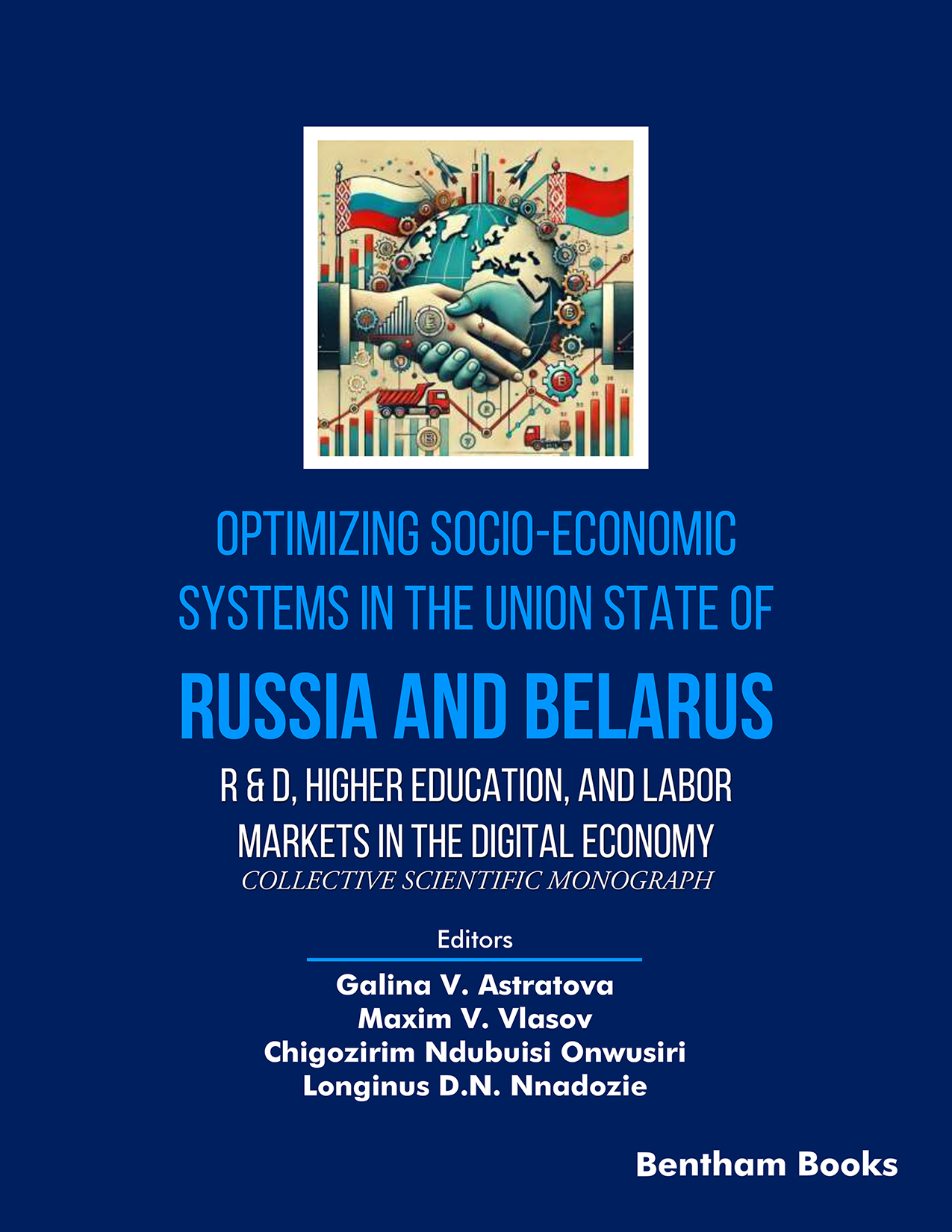
In an era defined by rapid technological advancement, geopolitical realignment, and unprecedented economic integration challenges, the quest to understand and optimize complex socio-economic systems has never been more critical. The Union State of Russia and Belarus represents a fascinating case study in economic integration, one that exists at the intersection of historical ties, contemporary geopolitical realities, and forward-looking digital transformation.
This volume, meticulously compiled under the leadership of Professors Galina V. Astratova, Maxim Vlasov, and Chigozirim Onwusiribe, emerges as a vital contribution to our understanding of how integrated economies can navigate the complexities of the digital age. It brings together a remarkable assembly of scholars across multiple disciplines, merging theoretical frameworks with practical applications to address pressing questions about optimal development pathways in interconnected economic systems.
What distinguishes this work is its comprehensive approach to examining the intricate relationships between seemingly disparate yet fundamentally connected sectors: the research and development services market, higher education systems, and evolving labor markets. The authors have admirably tackled the challenge of identifying optimal parameters for these systems' functioning through sophisticated methodological approaches, data mining, multifactor analysis, and economic-mathematical modeling, resulting in a work of substantial theoretical and practical significance.
Moreover, this book emphasizes the importance of fostering innovation ecosystems that leverage the unique strengths of both nations. By highlighting successful case studies and best practices, the authors provide a roadmap for enhancing collaboration between government, academia, and industry, which is essential for driving sustainable economic growth.
The timing of this research is particularly noteworthy. As economies worldwide reassess traditional models of growth and development in light of digital transformation, the insights presented here extend well beyond the specific case of the Russia-Belarus Union State. The mechanisms designed and analyzed throughout these pages offer valuable frameworks for policymakers, academic institutions, and economic strategists globally who are grappling with similar challenges of integration and optimization.
The authors' interdisciplinary expertise shines through in their treatment of creative human capital development—perhaps the most critical element in any knowledge economy. Their exploration of how educational institutions must evolve to meet emerging labor market demands while simultaneously driving innovation presents a balanced view that acknowledges both the transformative potential and inherent challenges of digitalization.
For researchers, this book provides a rigorous analytical foundation; for practitioners, it offers actionable insights into designing systems that can thrive amid constant change. The extensive international collaboration evident in this work also serves as a powerful reminder that academic inquiry transcends political boundaries, bringing together diverse perspectives in the service of shared knowledge advancement.
As we navigate the complex terrain of economic development in the twenty-first century, works like this—grounded in data, enriched by interdisciplinary thinking, and focused on practical applications—will prove indispensable guides. The authors have made a significant contribution to our collective understanding of how socio-economic systems can be optimally designed not just to weather change, but to harness it for sustainable development, ensuring that both Russia and Belarus can emerge as leaders in the global digital economy.
Inna V. Krakovetskaya
Department of National Research
Tomsk State University
Tomsk 634050, Tomsk Oblast
Russian Federation