
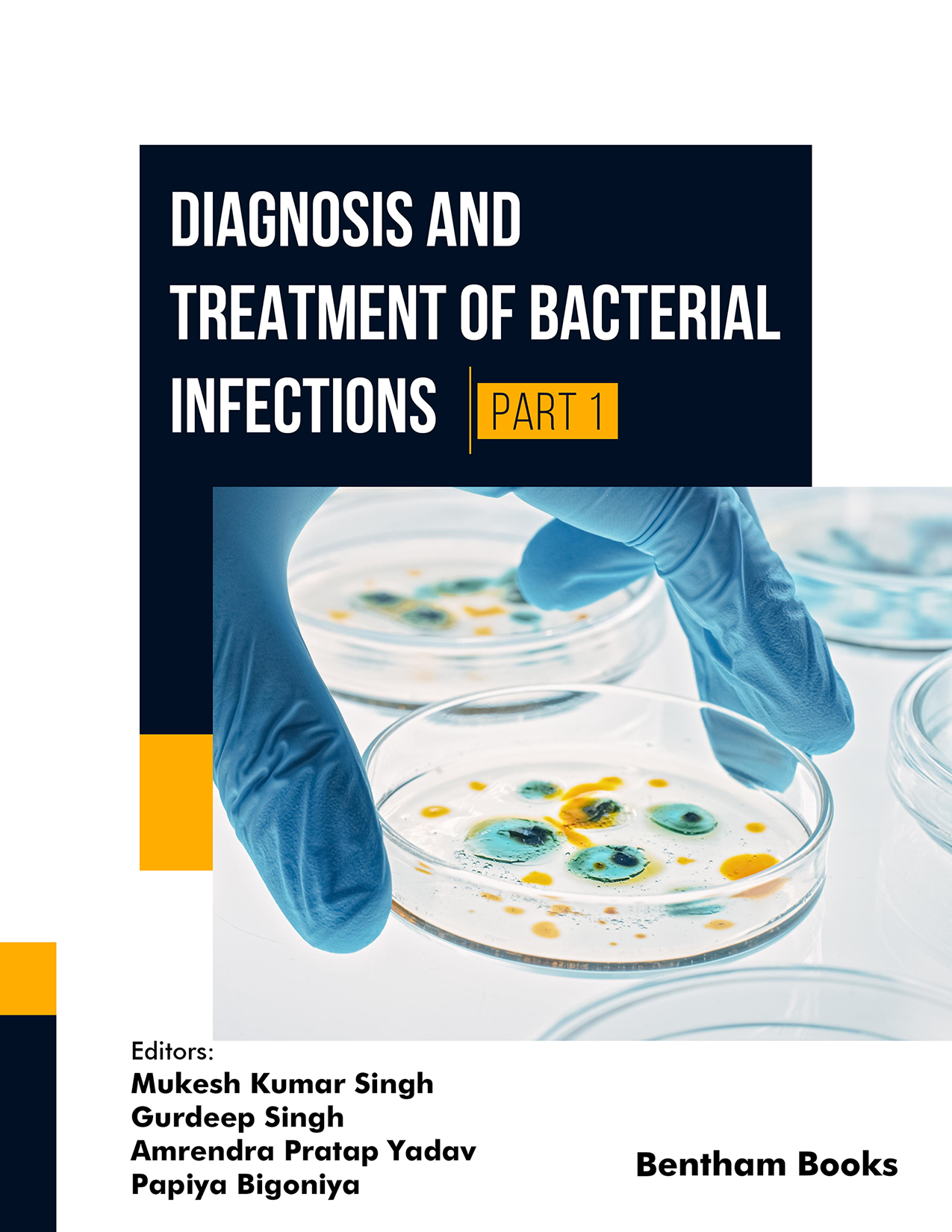
Editors: Mukesh Kumar Singh, Gurdeep Singh, Amrendra Pratap Yadav, Papiya Bigoniya

Diagnosis and Treatment of Bacterial Infections (Part 1)

eBook: US $49 Special Offer (PDF + Printed Copy): US $94
Printed Copy: US $69
Library License: US $196
ISBN: 979-8-89881-346-8 (Print)
ISBN: 979-8-89881-345-1 (Online)
Year of Publication: 2026
DOI: 10.2174/97988988134511260101

Introduction

Diagnosis and Treatment of Bacterial Infections offers a comprehensive and forward-looking review of bacterial infections, emphasising antimicrobial resistance (AMR) and innovative therapeutic strategies. Bridging microbiology, pharmacology, and clinical science, the book explores bacterial diseases from historical insights to modern molecular understanding, addressing the global challenges posed by resistant pathogens and complex infections. Topics include epidemiology, pathophysiology, limitations of traditional therapies, biofilm-related resistance, and emerging drug delivery methods, providing a holistic perspective for both research and clinical application.


Key Features

  • - In-depth coverage of bacterial infections with historical and molecular perspectives.
  • - Focus on antimicrobial resistance and biofilm-associated challenges.
  • - Discussion of advanced treatment methods and drug delivery technologies.
  • - Integrated approach linking basic science, applied therapeutics, and clinical practice.

Target Readership:

Students, researchers, academics and other professionals in microbiology, pharmaceutics, pharmaceutical sciences, and biomedical sciences.

Foreword

It is my distinct honour to have the opportunity to contribute the foreword for Diagnosis and Treatment of Bacterial Infections, Part I. This comprehensive text will examine bacterial infections from historical, epidemiological, and therapeutic perspectives. The authors discuss conventional and challenging ways to manage bacterial infections and explore cutting-edge ways that clinicians can manage antibiotic-resistant bacteria using targeted treatments for biofilm-associated resistant pathogens and novel drug delivery methods. The section on coinfections and opportunistic pathogens discusses how difficult it can be for clinicians to manage complex clinical cases and how precise and accurate diagnosis and treatment of patients is critical.

This Part will be an essential resource for researchers, medical professionals, and students, providing an overview of bacterial infections and current strategies for reducing the impact of antimicrobial resistance through advanced diagnostic and therapeutic options. I congratulate the authors for their impressive effort and wish them all the best in achieving their goal of improving understanding and managing bacterial infections.

Ranjit Singh
Shobhit University
Gangoh, Uttar Pradesh, India