
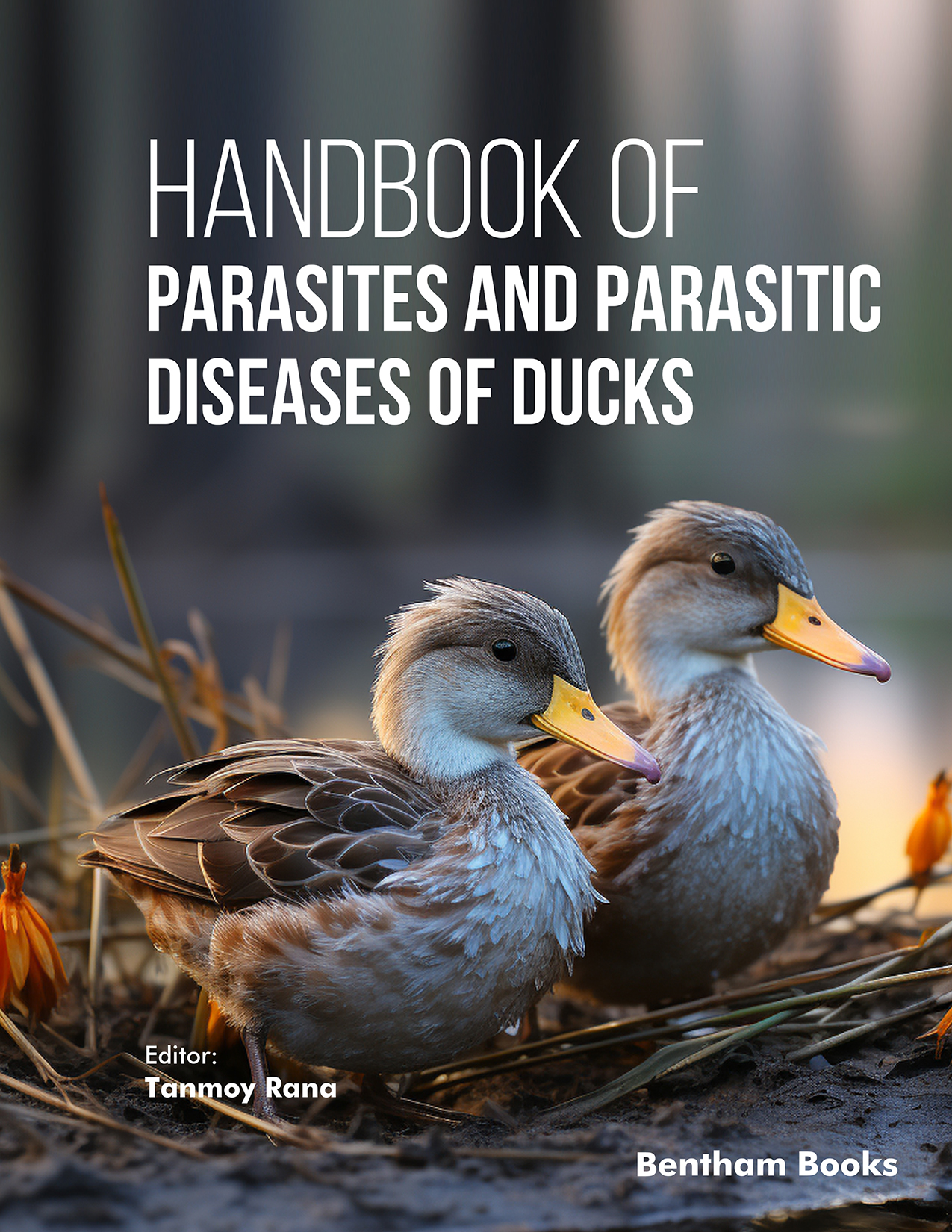
Handbook of Parasites and Parasitic Diseases of Ducks

Editor: Tanmoy Rana

Handbook of Parasites and Parasitic Diseases of Ducks

ISBN: 979-8-89881-748-0
eISBN: 979-8-89881-747-3 (Online)

Introduction

Handbook of Parasites and Parasitic Diseases of Ducks explains the major parasitic diseases affecting ducks and their impact on flock health, productivity, and public health. It covers the biology, life cycles, transmission, diagnosis, treatment, and prevention of both internal and external parasites commonly found in wild and domesticated ducks. The handbook also examines epidemiological risk factors associated with aquatic environments and different production systems, helping readers understand how parasites spread and how infections can be effectively managed.

This handbook combines essential scientific knowledge with practical disease management strategies. It is aimed as an essential resource for understanding how to improve duck health and sustainable poultry production for a wide range of academic and professional readers.


Key Features

  • - Systematically covers helminths, protozoa, and ectoparasites affecting ducks.
  • - Explains parasite life cycles, transmission routes, and disease mechanisms.
  • - Describes modern diagnostic methods and immunological responses.
  • - Provides practical guidance on antiparasitic treatments, prevention, and biosecurity.
  • - Provides information on advanced topics like zoonotic risks, drug resistance, vaccine development, and emerging parasitic diseases.
  • - Includes references for further reading.

Target Readership :

This is a textbook for students of veterinary medicine and zoology, and a practical handbook for researchers, veterinarians, poultry professionals and duck farmers.

Preface

Ducks, whether in captivity or free-living, are hosts to a wide variety of internal and external parasites. The pathogenicity of a parasite may differ in various species of birds as well as different populations of the same species. Treatment and preventive measures are very difficult in free-ranging ducks. However, excellent sanitation can help in combating many parasites in captive situations. The first edition of the book provided comprehensive, up-to-date information on the most important parasites of ducks, as well as their diagnosis, treatment, and preventive measures. In addition, climate change and global impacts can create opportunities for parasites to thrive across various systems in ducks. Parasitic diseases can reduce economic income and also cause difficulties in designing and implementing health control programs. This book consists of 22 chapters arranged sequentially. This book is intended in a colorful format that is easy to read and comprehend. The book is a good source for understanding the topics easily. The contributors are well-versed in their respective fields and have written their individual chapters with utmost care. This book is especially useful for DVM graduate students, postgraduates, farmers, farm managers, industry specialists, practitioners, academicians, researchers, veterinarians, and those with a special interest in duck health, production, and management. I always welcome constructive feedback and encouragement from my veterinarian colleagues around the world.

Tanmoy Rana
Department of Veterinary Clinical Complex
West Bengal University of Animal & Fishery, Sciences
Kolkata, West Bengal, India