In the age of digital transformation, the convergence of Artificial Intelligence (AI), Big Data, and Industry 4.0 technologies is not merely a technological shift—it represents a scientific revolution that is fundamentally altering the way we perceive, interact with, and solve realworld problems. Nowhere is this transformation more profound than in the domains of healthcare and manufacturing, where data-driven insights and intelligent automation are redefining standards of care and production.
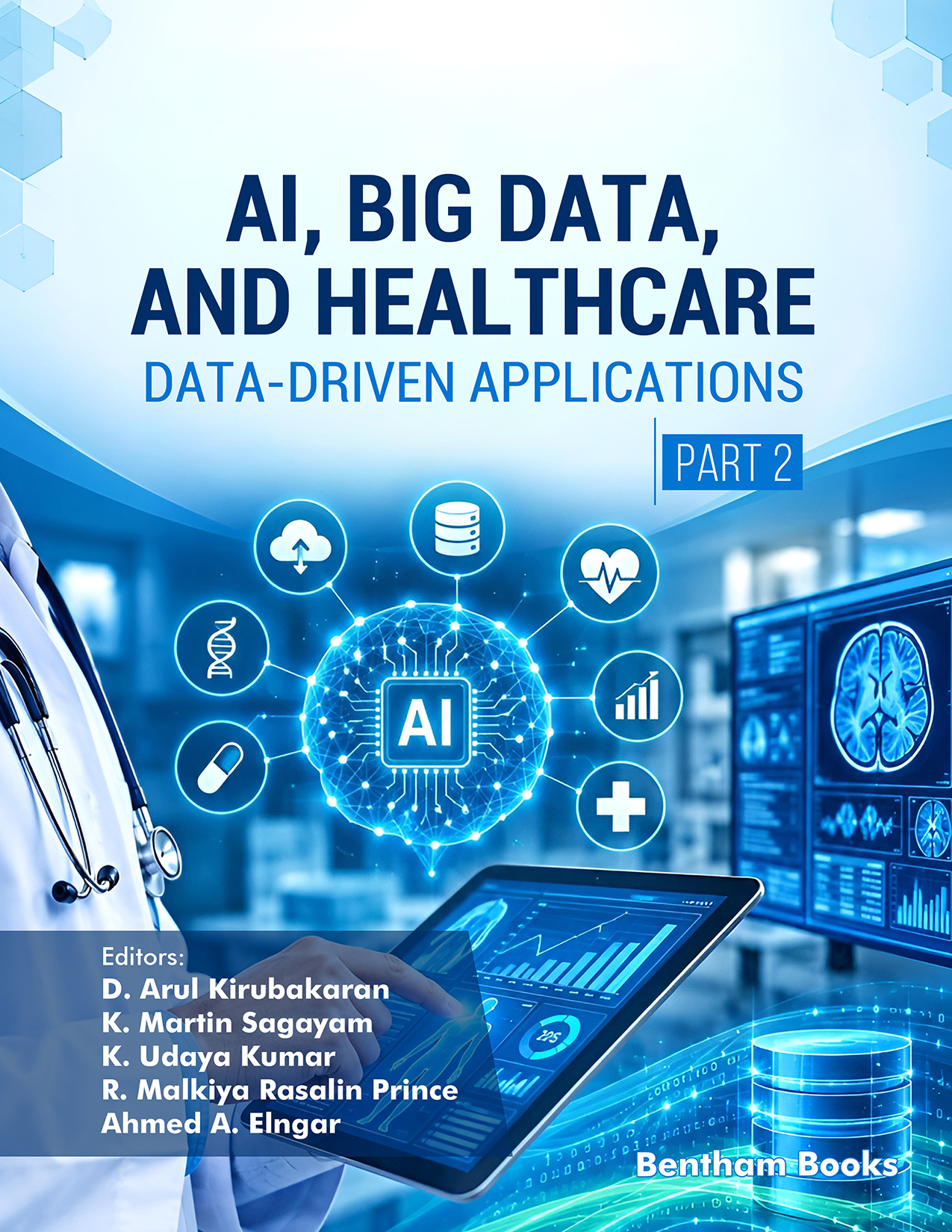
This book, “AI, Big Data, and Healthcare Data-Driven Applications,” offers a timely and comprehensive exploration into the emerging frontiers of applied AI. From a scientist’s perspective, the volume brings together meticulously curated research contributions that illustrate the evolving synergy between computational intelligence and domain-specific challenges. Each chapter stands as a testament to how scientific rigor and technological innovation can converge to unlock new possibilities in diagnostics, predictive modeling, and operational excellence.
The integration of AI with Big Data analytics provides a powerful lens through which complex patterns and correlations can be discerned—enabling early detection of diseases, precision medicine, and personalized healthcare strategies. These capabilities are underpinned by advancements in machine learning, deep learning, and natural language processing, which are increasingly demonstrating human-competitive performance in medical diagnostics and treatment recommendation systems.
Furthermore, the influence of Industry 4.0 and the Industrial Internet of Things (IIoT) is transforming conventional manufacturing systems into smart, self-adaptive environments, driven by real-time data and AI-powered decision-making. This book also delves into the ways in which these technologies are streamlining operations, optimizing resources, and enhancing product quality—paving the way toward intelligent, autonomous manufacturing ecosystems.
Key scientific themes include:
• Predictive and Descriptive Analytics in Healthcare – Showcasing novel AI models that elevate diagnostic accuracy and treatment planning.
• AI for Predictive Diabetes Care – Highlighting early detection frameworks and risk assessment models using supervised learning approaches.
• Deep Learning in Medical Imaging – Addressing breakthroughs in convolutional networks for pneumonia detection and endodontic image analysis.
• IoT-Based Health Monitoring – Demonstrating the integration of wearable technologies and IoT devices for real-time health surveillance.
• Biotechnology Security Analysis – Presenting analytical frameworks for evaluating global biosecurity policies using qualitative clustering techniques.
• Digital Health in India – Reviewing the impact of e-health initiatives, AI-backed services, and infrastructure development across the healthcare system.
• AI and Mental Health – Exploring predictive AI tools for detecting depressive disorders, especially in patients with chronic comorbidities.
• Smart Manufacturing and IIoT – Investigating automated processes, robotics, and adaptive control systems within the Industry 4.0 paradigm.
This volume is intended to be more than just a reference—it is a scientific compass for researchers, practitioners, and policy-makers navigating the rapidly expanding landscape of data-driven applications. The interdisciplinary nature of the content bridges gaps between computer science, healthcare, biotechnology, and industrial engineering—encouraging a holistic view of how AI and Big Data are reshaping our future.
As global challenges demand smarter, faster, and more reliable solutions, we believe this book will inspire curiosity, collaboration, and innovation among scientists, students, and professionals alike. It is through such collective knowledge and vision that we can continue to push the boundaries of what AI can achieve for society.
Tapas Debnath
Central Manufacturing Technology Institute
Ministry of Heavy Industries
Govt of India, India