
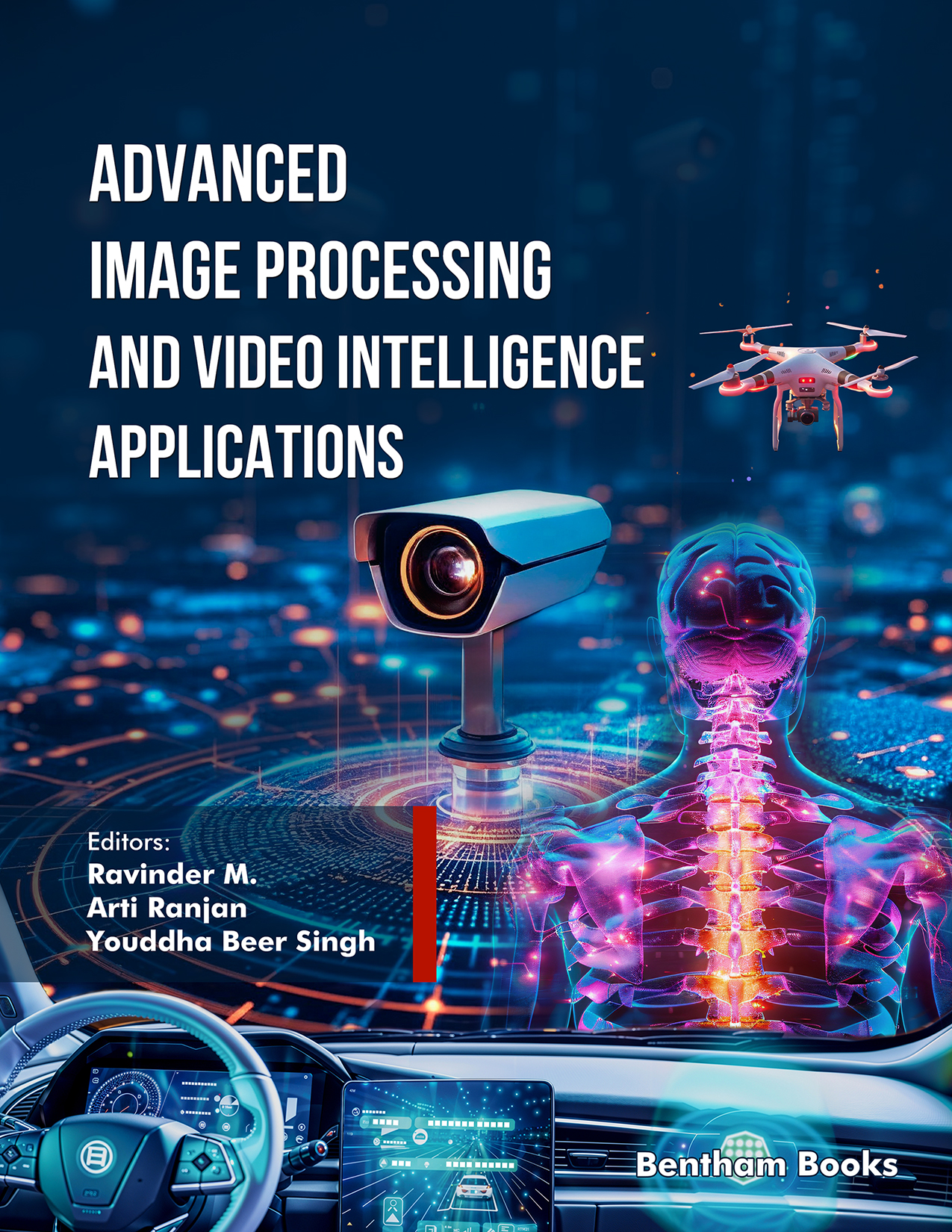
Advanced Image Processing and Video Intelligence Applications

Editors: Ravinder M., Arti Ranjan, Youddha Beer Singh

Advanced Image Processing and Video Intelligence Applications

ISBN: 979-8-89881-592-9
eISBN: 979-8-89881-591-2 (Online)

Introduction

Advanced Image Processing and Video Intelligence Applications focuses on how artificial intelligence and machine learning are transforming visual data processing. The book highlights methods for extracting meaningful information from images and videos to support intelligent decision-making across diverse domains.

It covers core concepts such as image enhancement, segmentation, feature extraction, and object detection, along with advanced topics including deep learning, computer vision, and real-time video analytics. Application areas include healthcare imaging, surveillance systems, autonomous systems, traffic monitoring, and multimedia processing. Practical examples and case studies demonstrate how these techniques are applied in real-world scenarios.


Key Features:

  • - Comprehensive coverage of image processing and video analytics techniques with a focus on both foundational concepts and advanced developments.
  • - Integration of AI, deep learning, and computer vision methods
  • - Real-world case studies and applications across healthcare, security, transportation, and media


Target Readership:

Researchers, postgraduate students, and academicians in computer science, artificial intelligence, and image processing

Foreword

We are living through a silent visual revolution in the digitally-first world of today. Previously merely capturing memories or information, images have evolved into rich, dynamic data sources that impact decisions, mold industries, and enhance the human experience. The strong, and frequently unseen, engine of image processing technologies, a field that has developed quickly and now affects almost every part of our lives, is responsible for this change.

Insightful and up to date, "Advanced Image Processing and Video Intelligence Applications" delves into this fascinating topic. From the basic ideas of image processing to its most advanced uses, which include smart surveillance, immersive entertainment, healthcare diagnostics, and even satellite imagery-based climate monitoring, it takes readers on an educational trip.

This book is unique because it carefully strikes a balance between technical complexity and readability. Both beginners and experts can relate to the authors' deft demythologizing of difficult subjects like machine learning, statistical techniques, and huge language models by placing them in relatable real-world scenarios. By doing this, they make it possible for a wide range of people to interact with one of the most influential technologies of our day, including students, teachers, business professionals, and inquisitive minds.

The book also seeks to delve deeper into the sociological and ethical ramifications of image processing, moving beyond the algorithms and mechanics. It is our duty to employ automated visual systems responsibly and equitably as our reliance on them increases. Because of this contemplation, Image Intelligence is more than just a technical guide; it is a credo for ethical innovation. I recommend this book with a great deal of gratitude and excitement. Image Intelligence will enlighten, inspire, and challenge you to view the world both literally and figuratively from a different perspective, regardless of whether you are new to image processing or looking to expand your knowledge.

Rashmi Rathi Upadhyay
Department of Computer Science and Engineering
Sharda University, Greater Noida, Uttar Pradesh
India