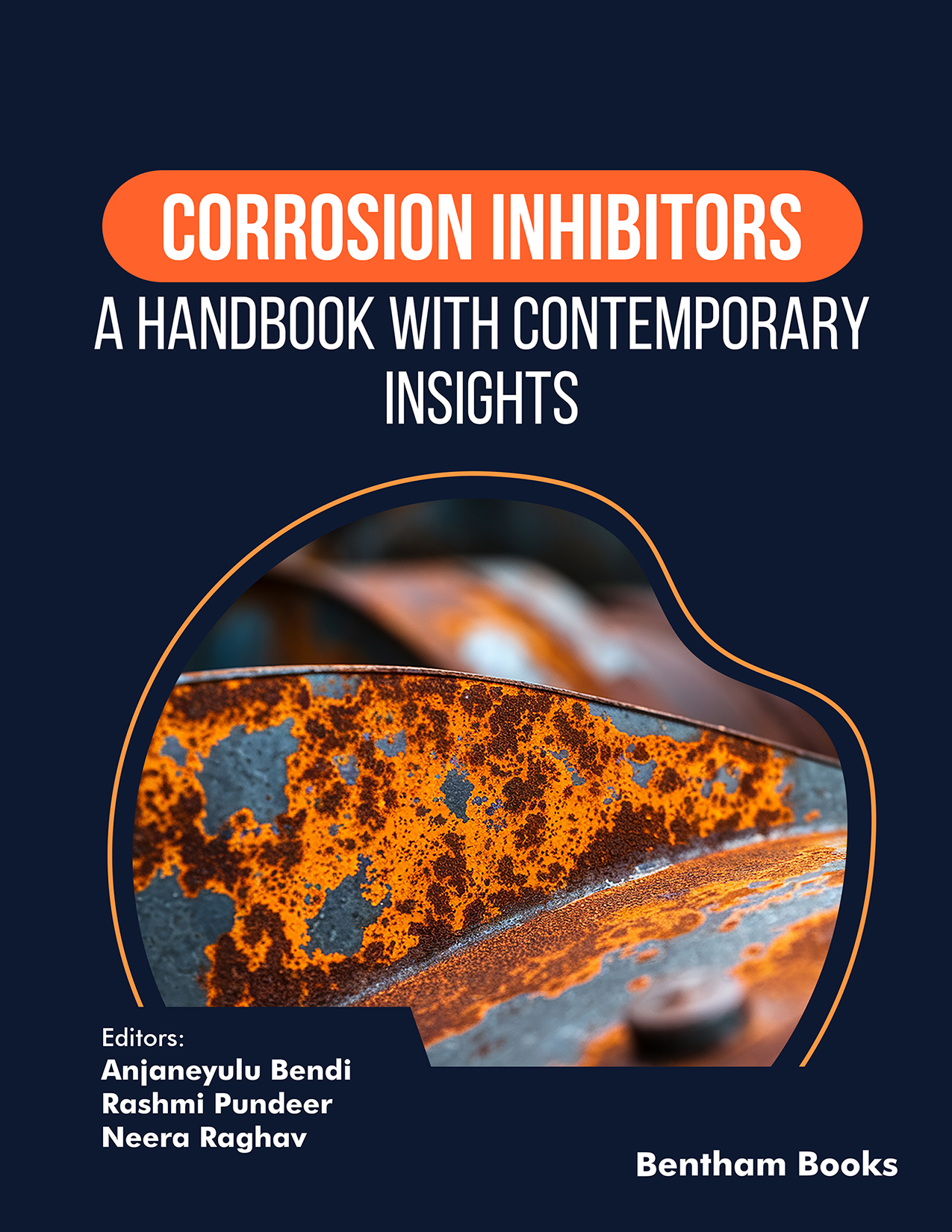
Interdisciplinary advancements involving aspects of chemistry, materials science, nanotechnology, and environmental engineering are shaping strategies to prevent corrosion. These developments have been useful in the creation of smarter, durable coatings and inhibitors that improve corrosion resistance while lowering operating expenses and associated negative environmental effects. They offer a comprehensive strategy for safeguarding vital infrastructure by fusing state-of-the-art technology with conventional corrosion research, making it more affordable, sustainable, and future-ready for a range of industries.
This book summarizes the most recent experimental research on the creation and use of materials as corrosion inhibitors in the form of ten chapters. The basic knowledge of corrosion, its effects on the economy and society, and its different forms and methods are all covered in detail in Chapter 1, along with the importance of corrosion inhibition, inhibitor evaluation techniques, selection standards, and contemporary delivery technologies. Chapter 2 details the classification of corrosion inhibitors based on their chemical nature, mechanism of action, and application environment.
The chemistry of corrosion inhibitors used to safeguard copper and its alloys is covered in detail in Chapter 3, with a focus on the inhibitors' structural compatibility and efficacy, and the industrial importance of copper, its functional characteristics, and the critical role inhibitors play in enhancing its performance and longevity.
In Chapter 4, the authors particularly focus on exploring the procedures to safeguard aluminium and its alloys, with an emphasis on how the corrosion inhibitors interact with the unique properties of the metal.
The function of biomass-based corrosion inhibitors in metal protection is covered in detail in Chapter 5, along with the need for environmentally friendly substitutes, the different kinds of biomass inhibitors, and how well they work to stop metal corrosion. Chapter 6 describes the use of natural products in corrosion inhibition, emphasizing environmentally friendly and sustainable solutions with the emphasis on plant extracts, natural polysaccharides, and fruit and vegetable derivatives as effective corrosion inhibitors.
The function of nanoparticles and nanocomposites in corrosion inhibition is covered in detail in Chapter 7, which highlights the importance of nanomaterials and engineered nanocomposites in the improvement of corrosion resistance through improved barrier properties and surface interactions. Chapter 8 details the application of corrosion inhibitors in reinforced concrete, emphasizing their importance in preserving structural integrity and covers various types of inhibitors, the electrochemical injection method (EICI), along with the significance of electrochemical chloride extraction techniques.
In conclusion, the goal of this book is to provide a comprehensive overview of the latest research on corrosion inhibitors and their transformative role in material protection. We aim to engage scholars, engineers, and industry professionals, inspiring them to explore innovative and sustainable solutions for combating corrosion across diverse sectors. Additionally, we believe this book will serve as a valuable resource for researchers, academics, and professionals.
We would like to express our profound appreciation and gratitude to all the contributing authors for their exceptional dedication and expertise in crafting the content of this book. Our heartfelt thanks extend to the publisher and the team involved for their seamless and professional management of the project at every stage, ensuring its timely and successful completion. Finally, we are deeply indebted to our families for their unwavering support, encouragement, and patience throughout this journey, without which this endeavour would not have been possible.
Anjaneyulu Bendi
Department of Chemistry, Kalinga University
New Raipur-492101, Chhattisgarh
India
Rashmi Pundeer
Department of Chemistry, Indira Gandhi University
Rewari-122502, Haryana
India
&
Neera Raghav
Department of Chemistry, Kurukshetra University
Kurukshetra-136119, Haryana
India