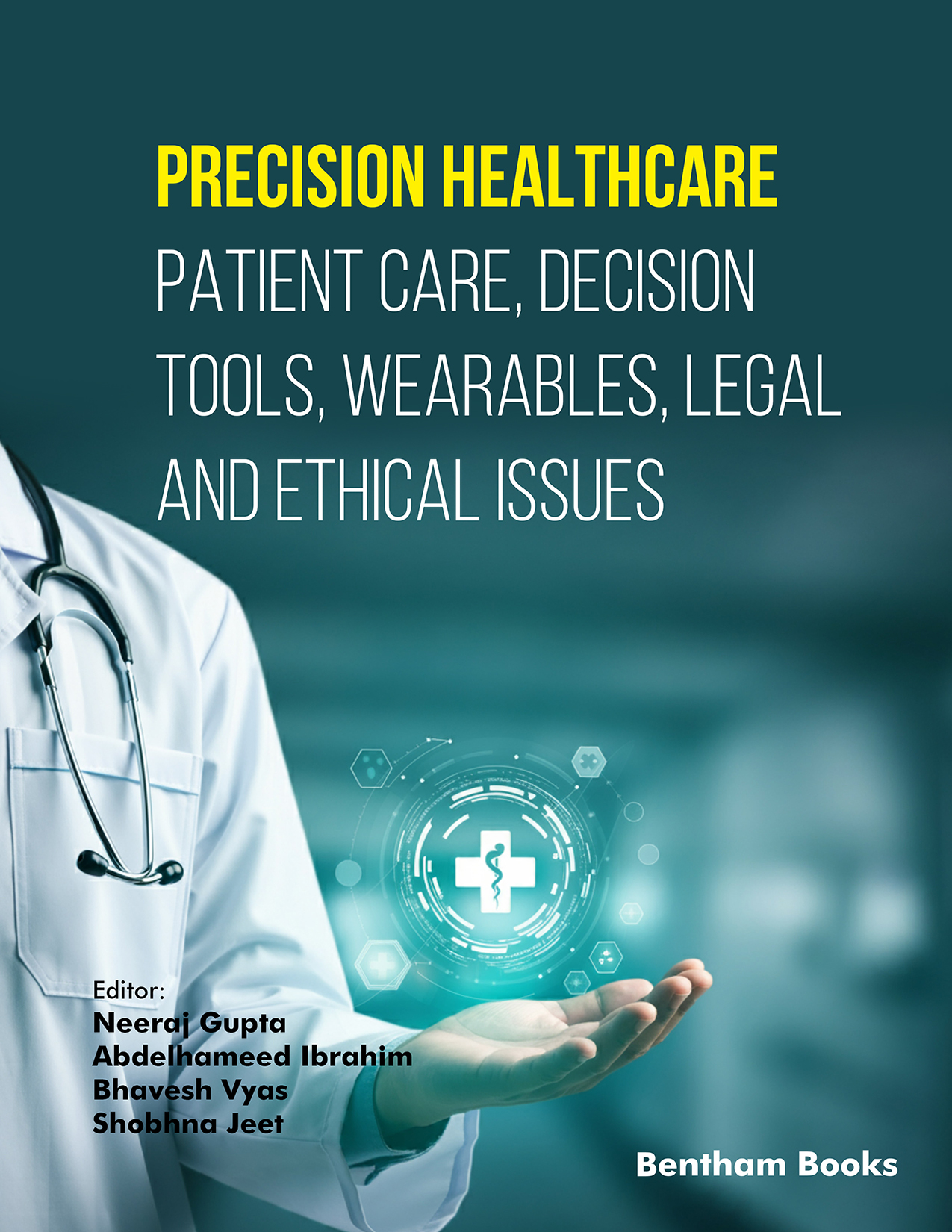
Precision healthcare, or personalized healthcare, is a medical approach tailored to a person's healthcare depending upon their genetics, environment, and lifestyle factors. Based on the parameters collected through sensors such as wearables, timely intervention can be tailored to safeguard patients even if they are not under the direct supervision of a medical practitioner. Precision healthcare encompasses a broader scope, covering genomics, precision medicine, machine learning algorithms, large language models, big data analytics to support clinical decisions and documentation, various aspects of patient care, and precise decision-making based on radiology through the use of computer vision. Maintaining and respecting patient’s data privacy and security is essential. The regulatory framework and law must be in tandem with ever-changing technology. Precision healthcare represents a significant shift towards individualized healthcare, aiming to improve outcomes and reduce costs in the long run. This book is an effort to bring relevant literature on healthcare in one place for use by academics, researchers, medical practitioners, and legal practitioners.
This book explores the concepts and techniques of precision healthcare, a promising and flourishing frontier in healthcare. Precision healthcare is a multidisciplinary field that draws work from machine learning, the Internet of Things, databases, statistics, information retrieval, pattern recognition, oncology, and knowledge-based systems. This book offers comprehensive information on various aspects of healthcare. The contents of this book will facilitate the reader's understanding of what is necessary in their respective fields. We aim to present an overall understanding of topics concerning precision healthcare from the students' perspectives, introduce the techniques and tools developed to facilitate healthcare operations, AI tools concerning oncology to enable researchers, complex legal frameworks and their implications, and discuss research directions. This book will encourage people from diverse backgrounds and experiences to share their thoughts, facilitating the promotion and development of this exciting and dynamic field.
The first chapter begins with outlining the foundations, challenges and AI-driven advancements shaping modern precision medicine. Chapter 2 examines how precision healthcare leverages data, AI, and collaborative innovation to deliver personalized treatments, while addressing the ethical and operational challenges that shaped its real-world adoption. Chapter 3 examines the transformative influence of the Internet of Medical Things (IoMT) on healthcare. Chapter 4 presents the IoMT-based lung disease classification to facilitate practitioners' decision-making. Chapter 5 gives insight into wearable technologies aiding the monitoring of patients' vital statistics and helping implement preventive strategies in emergencies. Chapters 6 to 8 illustrate the application of machine learning and data science in detecting and categorizing various diseases, including cardiovascular and diabetes. Chapter 9 explores the distinctive features, applications, and potential challenges associated with adopting large language models in the healthcare industry. Chapters 10 and 11 present various thoughts on ethical and legal frameworks concerning the adoption of precision healthcare technologies in the medical sector. Chapter 12 introduces the evolving field of precision healthcare and its promise for personalized, technology-driven patient care.
The editors are thankful to all the authors from various fields who have generously shared their knowledge and insights. Their contributions offer diverse perspectives, ensuring a well-rounded understanding of precision healthcare. The editors would like to express their gratitude to Prof. (Dr.) Arun Garg, Vice Chancellor, MVN University, for his valuable support. We extend our heartfelt thanks to the reviewers and our publishers for their unwavering support and dedication. This book would not have been possible without their collective efforts.
As the demand for personalized medical solutions grows, understanding the principles and applications of precision healthcare becomes increasingly essential. This book will inspire and inform, sparking new ideas and fostering advancements in precision healthcare. We invite you to explore the wealth of knowledge within these pages and join us in the journey towards a more personalized approach to medicine.
Neeraj Gupta
Panipat Institute of Engineering and Technology
Samalkha, Panipat, Haryana
India
Abdelhameed Ibrahim
Faculty of Engineering, Design and Information
& Communications Technology (EDICT), School of ICT
Bahrain Polytechnic, Isa Town, Bahrain
Bhavesh Vyas
NORMI Research Foundation
Gurugram, India
&
Shobhna Jeet
School of Legal Studies, K R Mangalam University
Gurugram, India