
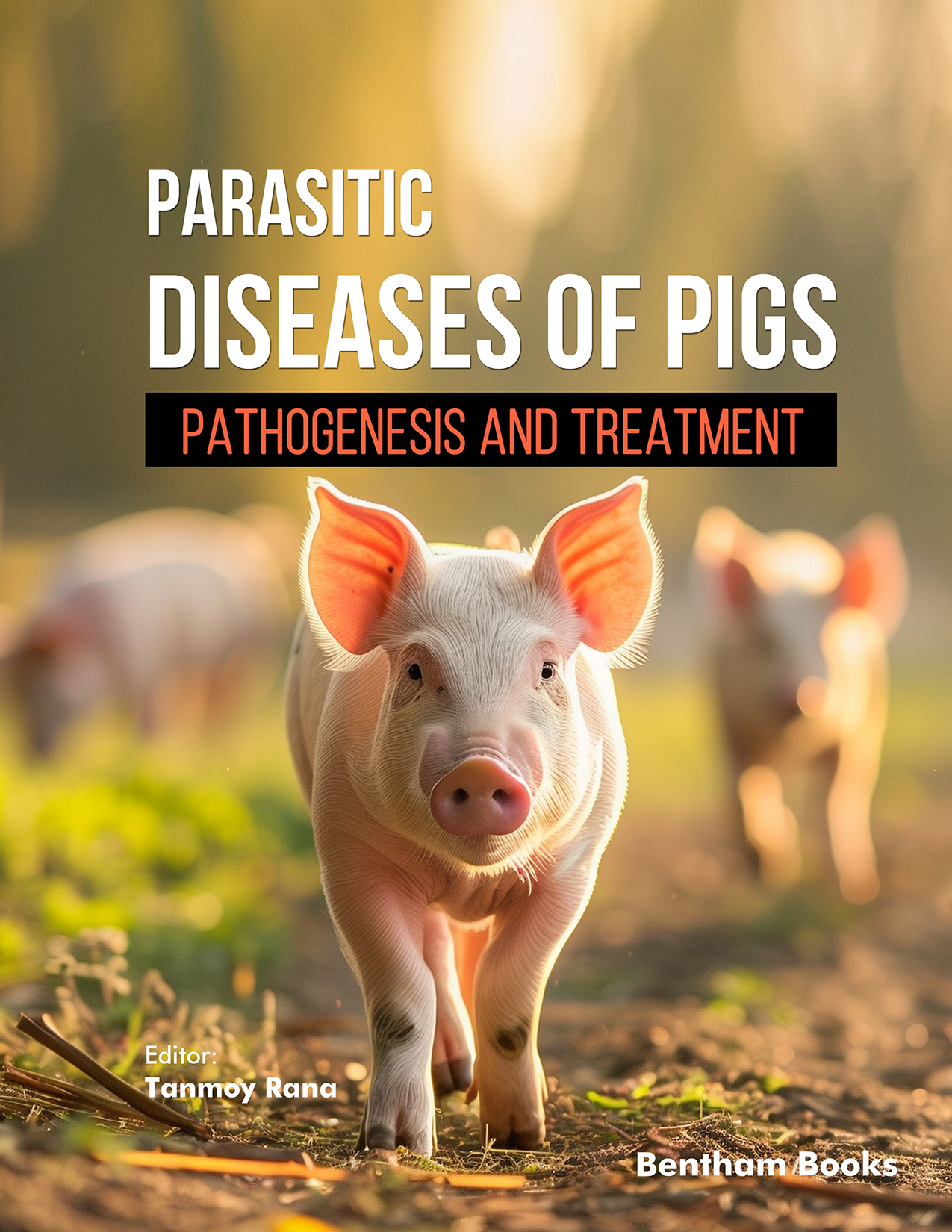
Parasitic Diseases of Pigs: Pathogenesis and Treatment

Editor: Tanmoy Rana

Parasitic Diseases of Pigs: Pathogenesis and Treatment

ISBN: 979-8-89881-871-5
eISBN: 979-8-89881-870-8 (Online)

Introduction

Description: This first edition textbook delivers up-to-date coverage of the most important parasites affecting pigs, along with their diagnosis, treatment and prevention. Climate change and globalization are creating conditions for parasites to thrive across pig production systems and parasitic diseases now pose a significant public health concern due to high global morbidity and mortality, while also hampering economic growth and complicating health control programs. Studying and updating the epidemiological behavior of these diseases is therefore essential, given the consequences of their emergence and re-emergence.

Key Features: Spanning 20 sequentially arranged chapters, the book is presented in a colorful, reader-friendly format supported by tables, flowcharts and photographs of specimens and microscopic images for clearer comprehension, with chapters contributed by authors well-versed in their subject areas.


Target Readership :

An asset for farmers, farm managers, industry specialists, practitioners, academics, researchers, veterinarians and DVM graduate students with a special interest in swine health, management and veterinary parasitology.

Preface

The first edition of this textbook provides up-to-date information on the most important parasites in pigs, their diagnosis, treatment, and prevention. Climate change and globalization can create an environment for parasites to thrive across various pig systems. Parasitic diseases are now considered an important public health concern due to the high morbidity and mortality rates throughout the globe. It also hampers economic growth and makes it difficult to design and implement health control programs. It is really essential to study and update the epidemiological behavior of tropical diseases, given the significant consequences of their emergence and re-emergence. This book consists of 20 chapters arranged sequentially. Various tables, flowcharts, and photographs of specimens and microscopic images are also appended for better comprehension of the subject. This book is also structured in a colorful format, making it easy to read and comprehend. The book is an asset for anyone looking to delve into the field of veterinary parasitology, especially pig parasites. The contributors are well-versed in their knowledge of writing the individual chapter. This book is especially intended for farmers, farm managers, industry specialists, practitioners, academics, researchers, veterinarians, and DVM graduate students engaged with a special interest in swine health and management. The book provides useful recent information about the updated research in clarifying the pathomechanisms, diagnosis, and treatment of parasitic diseases of pigs. I always welcome constructive feedback and encouragement from my veterinarian colleagues all over the world.

Tanmoy Rana
Department of Veterinary Clinical Complex
West Bengal University of Animal & Fishery Sciences
Kolkata, West Bengal, India