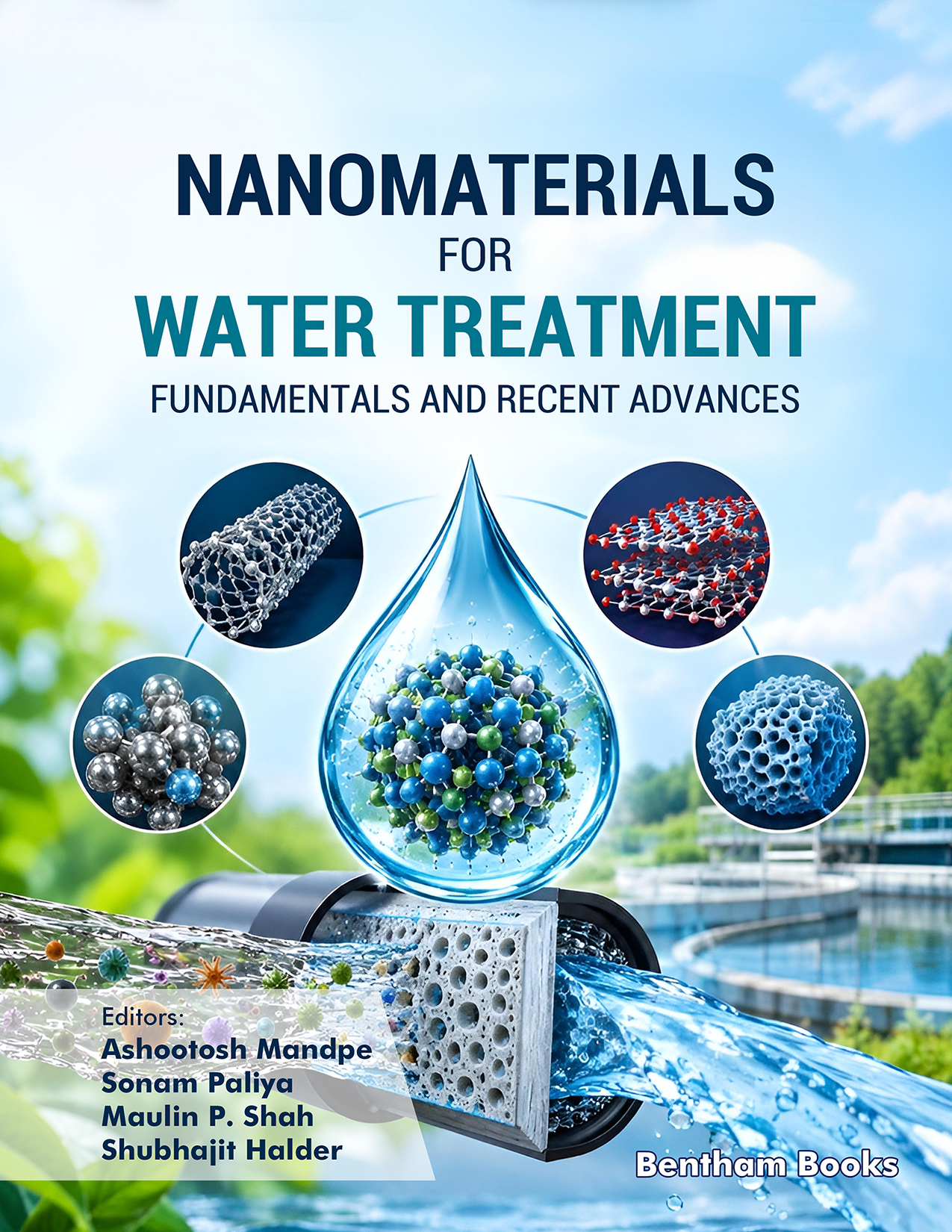
Water is the essence of life, yet access to clean and safe water remains a global challenge. Rapid industrialization, population growth, and environmental degradation have exacerbated water pollution, necessitating advanced treatment methods. In response, nanotechnology has emerged as a transformative approach in water treatment, offering highly efficient, sustainable, and cost-effective solutions. This book, Nanomaterials for Water Treatment: Fundamentals and Recent Advances, delves into the role of nanomaterials in addressing contemporary water purification challenges, bridging the gap between fundamental science and practical applications.
The book is structured to provide an in-depth understanding of the different types of nanomaterials and their applications in water treatment. The opening chapter, Sustainable Water Treatment Solutions: The Role of Green Nanotechnology in Enhancing Purification Processes, highlights the integration of environmentally friendly nanotechnologies in water purification. Subsequent chapters explore specific classes of nanomaterials, including Organic Nanoparticles for Water Treatment and Metal and Metal Oxide Nanomaterials for Water Treatment, showcasing their potential for contaminant removal.
Advancing the discussion, Harnessing Metal and Metal Oxide Nanomaterials for Clean Water Technologies elaborates on their mechanisms and efficiencies. The advantages of polymer-based nanomaterials are presented in Polymer-Based Nanomaterials in Water Treatment, emphasizing their adaptability and multifunctionality. Moreover, Functional Nanomaterials for Water Treatment provides insights into customized materials designed for specific contaminants.
Industrial wastewater treatment remains a critical concern, addressed in Industrial Wastewater Treatment and Sustainable Technology for Aquatic Microplastic/Nanoplastics Remediation, which discuss innovative strategies for mitigating environmental hazards. Design of Nanocomposites for Water Treatment explores hybrid materials with enhanced capabilities, while Magnetic Nanoparticles for Separation of Water Pollutants focuses on their efficiency in pollutant removal through magnetic recovery techniques.
Photocatalysis, a breakthrough in water treatment, is examined in Photocatalysis: Effective Method for Wastewater Treatment and Photocatalysis in Water Treatment: A Sustainable Approach, shedding light on its role in degrading organic pollutants. The ecological impact of nanomaterials is addressed in Effect of Nanoparticles in Maintaining the Biological Ecosystem in Water, ensuring a balance between technological advancements and environmental sustainability.
Finally, Future Trends in Nanomaterials for Water Treatment: A Patinformatics Analysis offers a forward-looking perspective, analyzing emerging innovations and trends in the field. This book serves as a valuable resource for researchers, environmental scientists, and policymakers, providing a comprehensive overview of nanotechnology-driven solutions for water purification. We hope it inspires further research and innovation toward achieving global water security.
Ashootosh Mandpe
Department of Civil Engineering
Indian Institute of Technology Indore
Madhya Pradesh, India
Sonam Paliya
Institute for Geology and Geochemistry of Petroleum and Coal
RWTH Aachen University
Aachen-52062, Germany
Maulin P. Shah
Environmental Microbiology Lab
Enviro Technology Limited
Ankleshwar, Gujarat
India
&
Shubhajit Halder
Department of Chemistry
Hislop College, Nagpur-440001
Maharashtra, India