
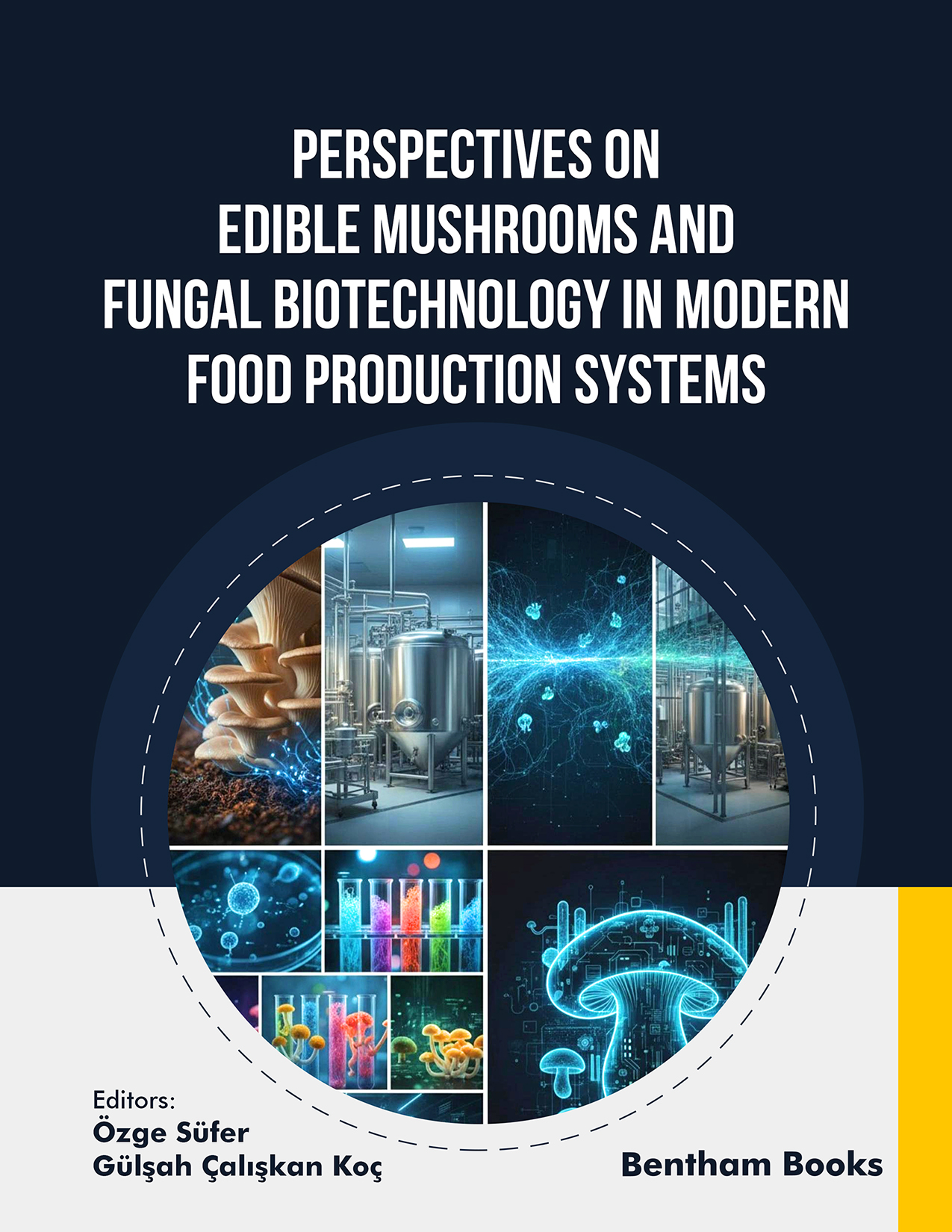
Perspectives on Edible Mushrooms and Fungal Biotechnology in Modern Food Production Systems

Editors: Özge Süfer, Gülşah Çalışkan Koç

Perspectives on Edible Mushrooms and Fungal Biotechnology in Modern Food Production Systems

ISBN: 979-8-89881-406-9
eISBN: 979-8-89881-405-2 (Online)

Introduction

Perspectives on Edible Mushrooms and Fungal Biotechnology in Modern Food Production Systems explores the role of fungi in contemporary food science, food engineering, and sustainable nutrition. The book addresses global challenges such as population growth, food security, environmental sustainability, and efficient resource utilisation, while also highlighting edible mushrooms and fungal biotechnology as promising solutions for resilient and innovative food production systems.

Beginning with the historical use of fungi in fermentation and food preservation, the book connects traditional practices with modern food processing technologies. It further examines mushroom cultivation techniques, optimisation of growth conditions, genetic improvement, and the development of fungal-based protein sources such as mycoproteins and plant-based meat alternatives. The book also discusses enzymatic applications, fermentation technologies, functional and bioactive compounds, nutraceutical development, and regulatory aspects associated with fungal food products.

Emphasising sustainability, the book explores circular economy principles, waste valorisation, life-cycle assessment, and resource-efficient production methods. Emerging technologies, including artificial intelligence, automation, and precision engineering, are discussed in relation to future fungal food systems, alongside critical considerations of food safety, ethics, and policy frameworks.


Key Features

  • - Comprehensive coverage of edible mushrooms and fungal biotechnology in modern food systems, including cultivation, genetic improvement and production optimisation.
  • - Discussion on the usage of fermentation technologies, enzymes, and bioactive compounds in food applications.
  • - Examines sustainability approaches, including circular economy, waste valorisation, and life-cycle assessment.
  • - Coverage of regulatory, safety, and ethical considerations in fungal food innovation.
  • - Integration of emerging technologies such as AI, automation, and precision engineering in food production.

Target Readership:

Academic researchers, students and industry professionals interested in innovative and sustainable food systems.

Preface

In today's world, the growing global population, concerns about environmental sustainability, and issues related to food security have significantly increased interest in alternative and innovative food sources. In this context, the potential of mushrooms and microscopic fungal organisms in the field of food engineering is being intensively explored by both academic and industrial communities. This book, titled "Perspectives on Edible Mushrooms and Fungal Biotechnology in Modern Food Production Systems," offers a comprehensive scientific perspective on the multifaceted contributions of fungi to food science and engineering and presents current advancements in the field in a systematic way.

The book begins by exploring the historical uses of fungi and extends to their integration into modern food processing technologies. Topics such as enzymatic applications, fermentation techniques, and mycological preservation methods are examined as examples where traditional knowledge meets modern science.

Subsequent chapters delve into edible mushroom cultivation, optimization of growth conditions, genetic improvement, and the development of fungal-based protein alternatives. Discussions on functional compounds, health benefits, and regulatory challenges in nutraceutical development provide a well-rounded view of fungi's role in promoting human health. Additionally, the use of fungal metabolites as natural flavor enhancers, colorants, and texturizers highlights their growing importance in food additive innovation.

Chapters focusing on sustainability emphasize resource efficiency, waste reduction, and the integration of circular economy principles in fungal food systems. The book also examines the role of fungi in addressing food scarcity and explores socioeconomic and policy-related barriers and opportunities. As such, it not only provides technical knowledge but also serves as a guide for policymakers and industry professionals.

The final sections explore how advanced technologies such as artificial intelligence, automation, and precision engineering are being integrated into fungal food production. They also highlight safety concerns, regulatory frameworks, and ethical considerations, offering predictions and research needs for the future of mycology in food systems.

The goal of this book is to serve as a comprehensive scientific resource for researchers, academics, food engineers, biotechnologists, and all stakeholders interested in understanding the role of fungal organisms in food systems. We hope that this book will inspire progress toward more sustainable, healthy, and innovative food solutions through the lens of mycology.

Özge SÜFER
Department of Food Processing, Eşme Vocational School, Uşak University, Eşme, Uşak, Türkiye

&

Gülşah ÇALIŞKAN KOÇ
Department of Food Engineering,
Osmaniye Korkut Ata University,
Osmaniye, Türkiye