
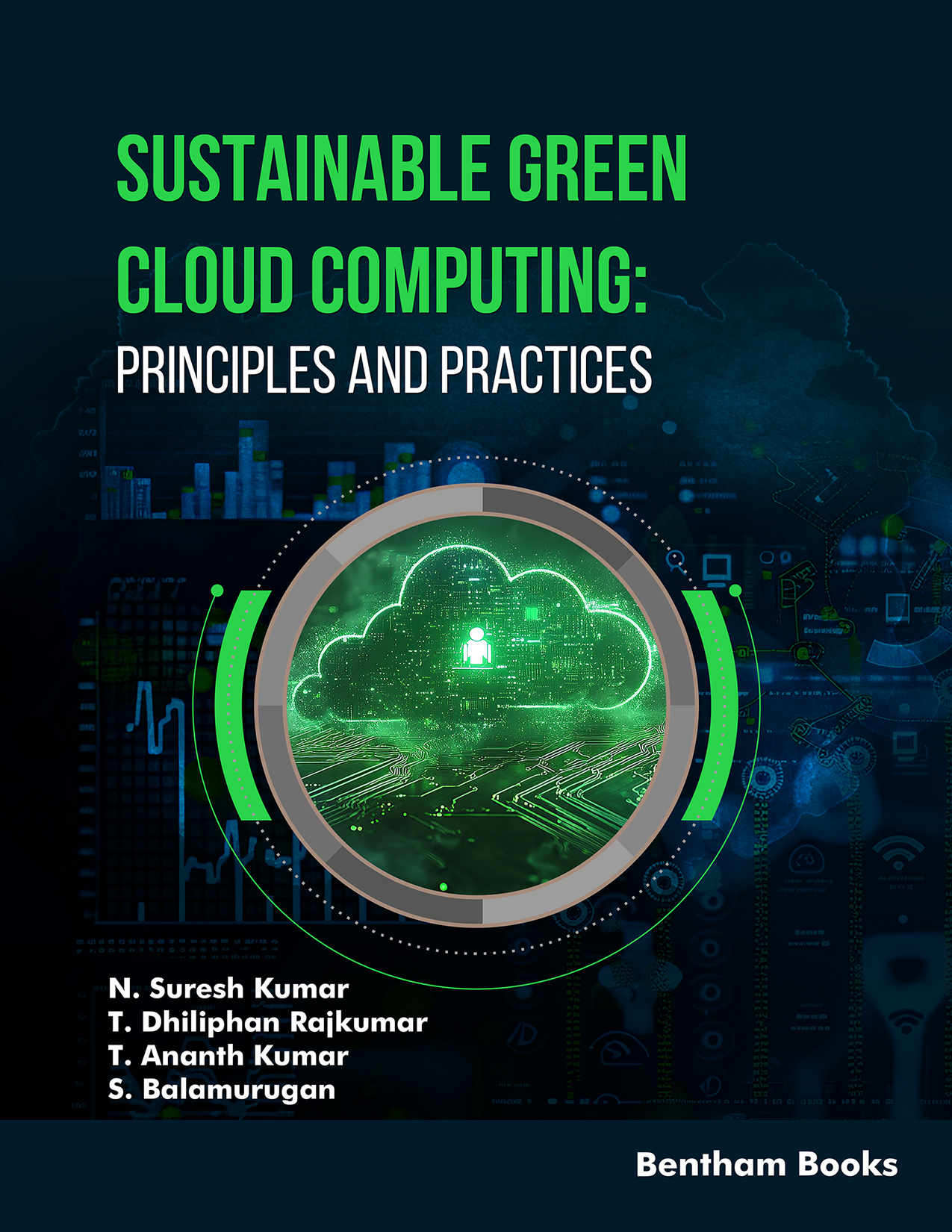
Sustainable Green Cloud Computing: Principles and Practices

Authors: N. Suresh Kumar, T. Dhiliphan Rajkumar, T. Ananth Kumar, S. Balamurugan

Series Title: Applied Machine Learning for IoT and Data Analytics (volume 2)

Sustainable Green Cloud Computing: Principles and Practices

Volume 2

ISBN: 979-8-89881-391-8
eISBN: 979-8-89881-390-1 (Online)

Introduction

Sustainable Green Cloud Computing: Principles and Practices offers a comprehensive and analytically grounded examination of cloud computing through the lens of sustainability, security, and modern software engineering. Addressing the growing environmental and operational challenges associated with large-scale digital infrastructure, this volume integrates green computing principles with cloud service design, virtualization technologies, and secure programming practices. It provides a structured framework for developing cloud systems that are efficient, scalable, environmentally responsible and resilient.

The book begins with foundational concepts in cloud computing within a green computing environment, examining how SaaS, IaaS, and PaaS models contribute to optimized resource utilization and reduced carbon footprints. It then explores cloud service stacks and business models, including layered service architectures and financial perspectives that shape deployment strategies. Dedicated chapters analyze virtualization technologies, outlining their benefits, limitations, and implementation best practices. A detailed treatment of cloud security architecture addresses trusted computing, identity and access management, virtualization security, and autonomic protection mechanisms. The final section presents practical programming applications and software packages, including Java-based systems for data mining, plagiarism detection, and real-time communication.

Balancing theoretical foundations with applied knowledge, this book serves as a valuable reference for students, researchers, educators, and industry professionals seeking sustainable and secure cloud computing solutions.


Key Features

  • - Balances Theory and Applications
  • - Gives an overview of computing models and architectures
  • - Includes notes on packages and programming tools
  • - Provides References for advanced readers

Readership:

Students, researchers, educators, and industry professionals

Preface

Cloud computing has emerged as a transformative force in the swiftly evolving technological landscape. The demand for more efficient, scalable, and environmentally sustainable solutions has reached unprecedented levels as organizations, governments, and individuals increasingly rely on digital platforms for data storage and the functioning of complex software systems. Green computing, which emphasizes sustainability and energy efficiency, significantly drives the advancement of cloud technologies. This book, Cloud Services in Green Computing Environments, aims to examine the intersection of cloud computing and green technology by analyzing various cloud service models, architectures, and innovative applications.

Chapter 1 discusses the three primary service models: Software as a Service (SaaS), Infrastructure as a Service (IaaS), and Platform as a Service (PaaS), which establish the foundation for the journey. Each of these service models provides scalable, on-demand resources that help businesses minimize their carbon footprints while leveraging the benefits of a robust computing infrastructure. SaaS has fundamentally transformed software delivery by enabling subscription-based access to applications that previously necessitated substantial on-premise hardware. This model is augmented by IaaS and PaaS, which offer flexible, virtualized resources that can be customized to specific business needs.

Chapter 2 analyzes seven distinct cloud business models and the five-layer cloud service stack, focusing on the commercial aspects of cloud computing. We examine how cloud computing has transformed industries by providing cost-effective computing power and storage solutions, as illustrated by case studies presented by Jeff Bezos and Amazon. This chapter examines how companies calculate and store data in cloud environments, highlighting key strategies for enhancing productivity.

Chapter 3 introduces the concept of cloud virtualization, an essential technology that enhances the flexibility and scalability of cloud computing. Virtualization enables businesses to operate multiple Virtual Machines (VMs) on a single physical server by abstracting the intricacies of the underlying hardware. This chapter examines the limitations of virtualization, including issues related to resource management and security vulnerabilities, despite its numerous benefits.

Chapter 4 analyzes the security architecture and environment necessary for safeguarding cloud systems, as security is a paramount concern in cloud computing. This chapter encompasses various security measures, including the construction of secure cloud infrastructures, assurance of data privacy, compliance, and access control. Establishing trust via robust security protocols is essential for any cloud service provider as increasingly sensitive data is stored in the cloud.

Chapter 5 focuses on cloud programming, examining the programming languages and tools used for developing applications in cloud environments. Java is crucial to cloud computing due to its scalability and platform independence. This chapter provides readers with a comprehensive understanding of developing and deploying cloud-ready applications, including discussions on Java-based packages for data mining, performance monitoring, and security applications.

N. Suresh Kumar
Chetinad Academy of Research and Education
Kelambakkam, Tamil Nadu
India

T. Dhiliphan Rajkumar
Kalasalingam Academy of Research and Education
Krishnankoil, Tamil Nadu
India

T. Ananth Kumar
IFET College of Engineering
Villupuram, India

&

S. Balamurugan
Intelligent Research Consultancy Services (iRCS)
Coimbatore, Tamil Nadu
India