Preface
The digital transformation of the modern enterprise landscape has ushered in an era of boundless opportunities-yet it also brings with it unprecedented challenges in cybersecurity. As organizations increasingly depend on interconnected systems, cloud platforms, and mobile infrastructures, the sophistication, scale, and frequency of cyber threats have risen alarmingly. In this context, the role of Artificial Intelligence (AI) has shifted from a futuristic concept to an indispensable asset in proactive threat detection and response.
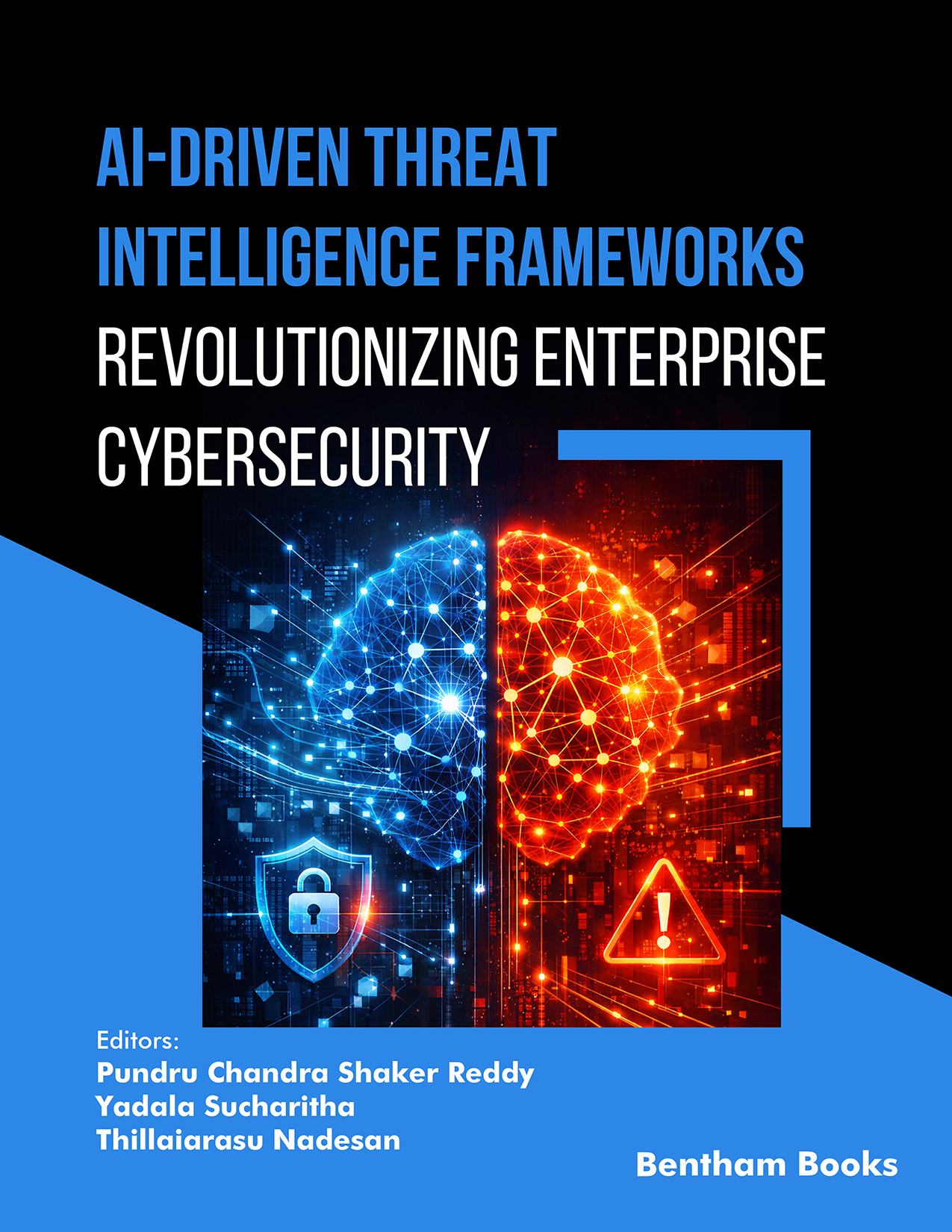
This edited volume, AI-Driven Threat Intelligence Frameworks: Revolutionizing Enterprise Cybersecurity, serves as a timely and comprehensive resource that explores how AI technologies are redefining threat intelligence and transforming cybersecurity operations across sectors. It brings together leading scholars, researchers, and practitioners who provide insights into the convergence of AI and cybersecurity, while also addressing the operational, ethical, and strategic considerations in deploying AI-driven frameworks.
The book is structured into twelve thought-provoking chapters, each contributing to a broader understanding of the evolving cybersecurity landscape:
-
Chapter 1 lays the foundation by discussing the broad spectrum of cybersecurity applications, current challenges, and forward-looking directions in the digital age.
-
Chapter 2 introduces fundamental AI concepts, tracing their historical evolution and relevance to modern applications.
-
Chapter 3 bridges the domains of AI and cybersecurity, highlighting synergies, overlaps, and practical implementations.
-
Chapter 4 presents an interdisciplinary perspective on how English language proficiency plays a role in AI-driven cybersecurity settings.
-
Chapter 5 delves into the dynamics of social networks, exploring how AI can be used for cyber threat intelligence and trend prediction, especially in platforms like X.
-
Chapter 6 offers a practical guide to Security Operations Centres (SOC), emphasizing their transformation in the AI era.
-
Chapter 7 focuses on endpoint security, showing the shift from traditional reactive approaches to intelligent, AI-enabled proactive strategies.
-
Chapter 8 explores sentiment analysis in cybersecurity contexts, including applications, datasets, challenges, and future outlooks.
-
Chapter 9 examines the convergence of AI and blockchain, investigating integration feasibility, research gaps, and emerging applications.
-
Chapter 10 introduces a novel framework for managing cybersecurity in Socially Responsible Investment (SRI) funds, balancing ethical compliance with threat mitigation.
-
Chapter 11 investigates security in smart cities, analyzing use cases, technological advancements, challenges, and evolving trends.
-
Chapter 12 concludes with a visionary chapter on the next generation of AI in cybersecurity, addressing upcoming trends and future research directions.
Together, these chapters offer a multidimensional perspective on AI-driven threat intelligence from foundational knowledge to advanced frameworks and practical use cases. The book aims to serve not only as a scholarly reference but also as a practical guide for professionals, decision-makers, and students navigating the complexities of modern cybersecurity ecosystems.
We extend our sincere gratitude to all the contributing authors and reviewers whose expertise and commitment have enriched this volume. We also acknowledge the support from Bentham Science, whose platform continues to foster meaningful contributions to emerging areas of science and technology.
We hope this book will inspire future research, encourage cross-disciplinary collaboration, and support enterprises in building resilient and intelligent cybersecurity strategies.
Dr. Pundru Chandra Shaker Reddy
Department of Computer Science and Engineering
Amity School of Engineering and Technology
Amity University, Noida
Uttar Pradesh, India
Dr. Yadala Sucharitha
Department of Computer Science and Engineering
Sharda School of Engineering and Technology
Sharda University, Greater Noida
Uttar Pradesh, India
Dr. Thillaiarasu N
School of Computing and Information Technology
REVA University, Bangalore
Karnataka, India