
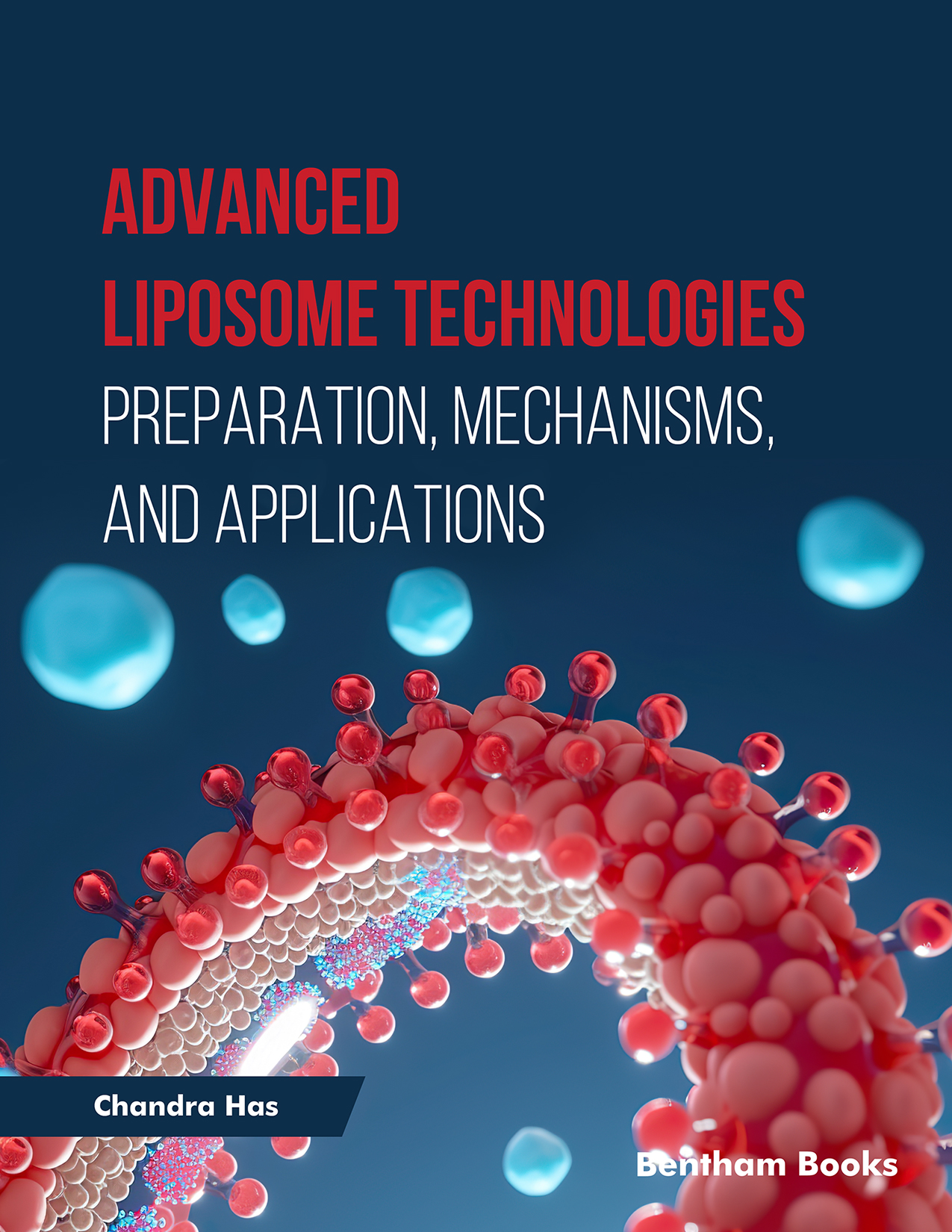
Advanced Liposome Technologies: Preparation, Mechanisms, and Applications

Author: Chandra Has

Affiliation: Department of Chemical Engineering, GSFC University, Vadodara, Gujarat, India

Advanced Liposome Technologies: Preparation, Mechanisms, and Applications

ISBN: 979-8-89881-334-5
eISBN: 979-8-89881-333-8 (Online)

Introduction

Advanced Liposome Technologies is a practical and research-focused overview of liposome-based systems and their expanding role in modern drug delivery, diagnostics, and therapeutics. Beginning with foundational principles, the book explains liposome structure, behaviour, and formulation approaches, followed by detailed discussions on preparation techniques, characterisation methods, and mechanistic pathways that govern liposomal performance.

With special emphasis on stability enhancement, controlled release mechanisms, surface modification, and emerging innovations such as stimuli-responsive liposomes and multifunctional nanocarriers, chapters explore applications across oncology, infectious diseases, vaccine development, gene delivery, and targeted therapy.

Key Features

  • - Explains key preparation and characterisation techniques for diverse liposomal formulations.
  • - Details the mechanisms of drug encapsulation, release, and targeting.
  • - Showcases therapeutic and diagnostic applications across multiple disease areas.
  • - Highlights advances in surface engineering and smart, stimuli-responsive liposomes.
  • - Presents real-world case studies and current research trends.

Target Readership:

Scientists, researchers, and postgraduate students, clinicians, biotech professionals, and industry experts interested in liposomal therapeutics and innovations in drug delivery.

Preface

Liposome technology has captivated academics and inventors for over five decades, with unrivalled applications in medicine delivery, vaccine development, cosmetics, agriculture, and environmental science. Liposomes, the first nanomedicine to be licensed for human use, are notable for their biocompatibility and biodegradability, originating from their structural similarities to our cell membranes. Today, more than 30 authorized liposomal medicinal solutions address significant health issues, demonstrating the importance of liposomes in modern science and technology. Milestones in liposome technology include the development of PEGylated and cationic liposomes, pH-sensitive systems for gene delivery, and scalable microfluidic production processes, underscoring their continuing impact on modern science and medicine.

This book offers an approachable introduction to liposome technology, connecting fundamental ideas with current advances to appeal to both novice and expert researchers. It covers both traditional and new liposome preparation methods, describing mechanics in a straightforward yet extensive manner. Liposomes are commonly utilised in drug delivery systems for targeted therapy and vaccine development in pharmaceutics, but they also have uses in cosmetics, agriculture, and environmental research. Liposomes serve as excellent model membranes for researching mechanical characteristics, transport properties, curvature dynamics, and pore formation. The book is structured into two comprehensive parts. The first part focuses on lipid chemistry and physics, exploring their classes, advanced extraction techniques, purification methods, and the thermodynamics of bilayer formation, establishing a strong foundation for liposome science. The second part focuses on modern advancements, including microfluidic techniques for liposome synthesis and their applications in medical, non-medical, and model membrane studies.

I believe that this book will be a great resource for researchers, students, instructors, scientists, and academics all across the world, motivating more investigation into the enormous possibilities of liposome technology. I cordially welcome readers to provide feedback and thoughts, which will be useful in improving and refining future versions of this book. Chandra

Chandra Has
Department of Chemical Engineering
GSFC University, Vadodara, Gujarat, India