
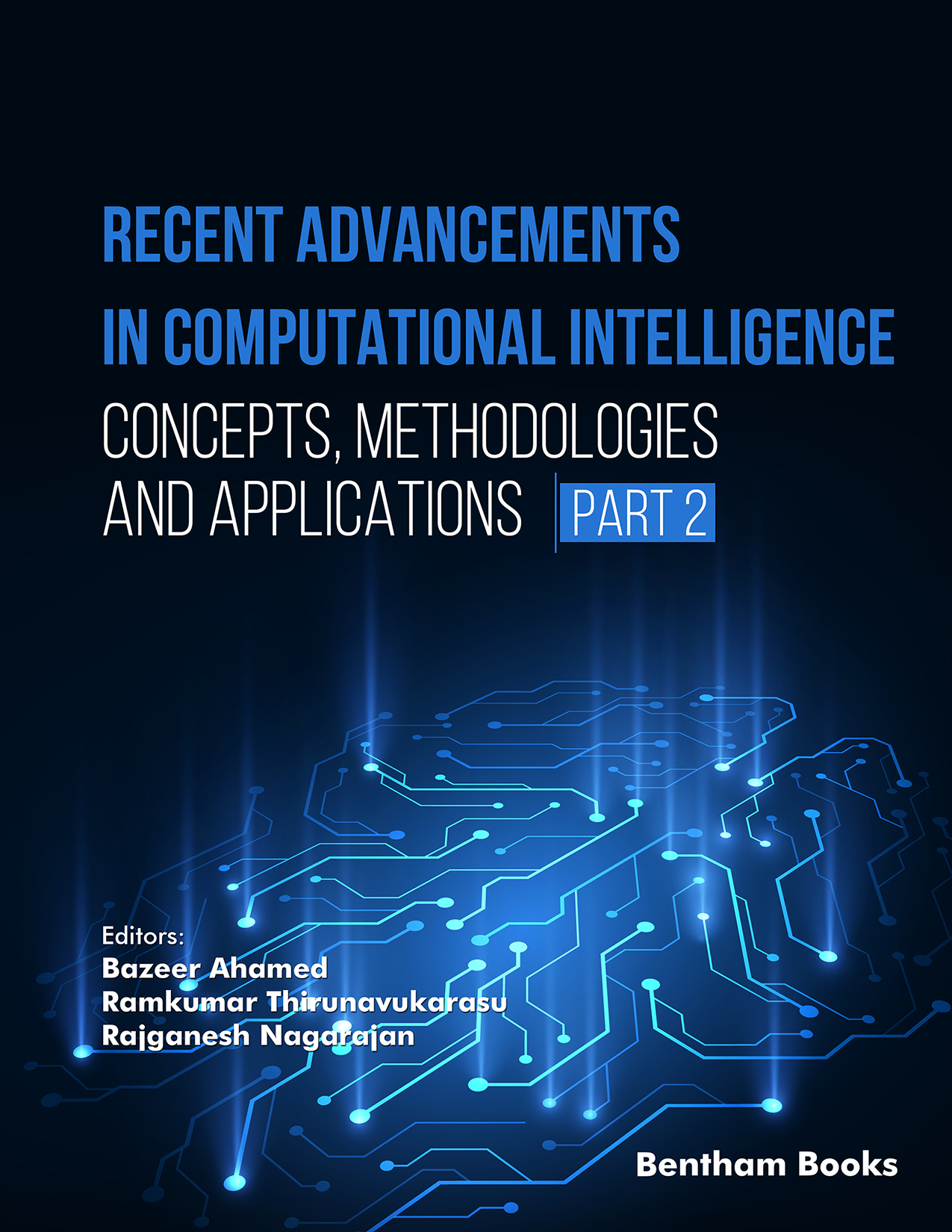
Editors: Bazeer Ahamed, Ramkumar Thirunavukarasu, Rajganesh Nagarajan

Recent Advancements in Computational Intelligence: Concepts, Methodologies and Applications (Part 2)

eBook: US $59 Special Offer (PDF + Printed Copy): US $107
Printed Copy: US $77
Library License: US $236
ISBN: 979-8-89881-289-8 (Print)
ISBN: 979-8-89881-288-1 (Online)
Year of Publication: 2026

Introduction

Recent Advancements in Computational Intelligence: Concepts, Methodologies and Applications (Part 2) explores cutting-edge developments in computational intelligence (CI), a dynamic field at the intersection of artificial intelligence, machine learning, and data science. Emphasising biologically inspired techniques such as neural networks, fuzzy logic, swarm intelligence, and evolutionary algorithms, the book demonstrates how CI solves real-world challenges involving uncertainty, ambiguity, and incomplete information. Aligned with Industry 4.0, it bridges theoretical foundations with practical applications across diverse domains, including healthcare, autonomous systems, cybersecurity, and smart computing.

Structured into thematic sections, the book covers Social Computing, High-Performance Computing, Network Science, Smart Computing, and Intelligent Communications. Key chapters explore deep learning for autonomous vehicles, AI-driven healthcare diagnostics, graph theory for cybersecurity, edge computing in IoT, and reinforcement learning for generative AI. Case studies highlight innovations such as myelin segmentation in pediatric MRI, personalised marketing AI, and secure password generation with multi-factor authentication. Contributions from global experts offer a balanced blend of theoretical rigour and applied research.


Key Features

  • - Comprehensive coverage integrating CI concepts with emerging trends like generative AI and edge computing.
  • - Real-world case studies demonstrating CI’s transformative potential in industry.
  • - An interdisciplinary approach connecting computer science, engineering, and healthcare.
  • - Practical methodologies for researchers and implementable strategies for practitioners.

Target Readership:

Researchers, academics, students and professionals in AI, computer science, and data engineering

Preface

The rapid evolution of computational intelligence (CI) has paved the way for transformative innovations across diverse sectors. From healthcare and cybersecurity to smart agriculture and human-machine interaction, the integration of advanced algorithms and intelligent systems redefines the boundaries of what technology can achieve.

This volume, RECENT ADVANCEMENTS IN COMPUTATIONAL INTELLIGENCE: CONCEPTS, METHODOLOGIES, AND APPLICATIONS (PART -II), brings together a curated collection of contemporary research that demonstrates how computational intelligence is being harnessed to solve real-world problems. It emphasizes the practical deployment of deep learning, machine learning, graph theory, and reinforcement learning in domain-specific contexts such as medical diagnostics, autonomous vehicles, biometric systems, and more.

The chapters in this book cover a wide array of critical applications. For instance, readers will explore deep neural network models for self-driving vehicles, intelligent methods for cybersecurity using graph theory, and advanced deep learning frameworks for diagnosing brain tumors and forecasting diseases. Novel contributions in assistive technology, such as enhanced audio description systems and real-time eye movement detection for vision-based interfaces, showcase the social impact of applied CI. Additionally, the use of ensemble learning in agriculture and personalized AI mentoring for fitness further illustrates the breadth of this field’s relevance.

This compilation serves as a valuable resource for researchers, academicians, practitioners, and students seeking a deeper understanding of how computational intelligence is revolutionizing applied domains. By blending theoretical insights with implementation-driven case studies, this volume aims to inspire innovation and promote cross-disciplinary collaboration.

We express our gratitude to all contributing authors for their commitment to advancing knowledge and the editorial team for their rigorous efforts in assembling this work. We hope this book will stimulate new ideas, foster academic discourse, and serve as a stepping stone for future breakthroughs in the ever-expanding landscape of computational intelligence.

Bazeer Ahamed
College of Computing and Information Sciences -Al Musannah
University of Technology and Applied Sciences
Al Musannah, Sultanate of Oman

Ramkumar Thirunavukarasu
School of Computer Science
Engineering and Information Systems
Vellore Institute of Technology
Tamil Nadu, India

&

Rajganesh Nagarajan
Department of Computer Science and Engineering
Sri Venkateswara College of Engineering
Andhra Pradesh, India