
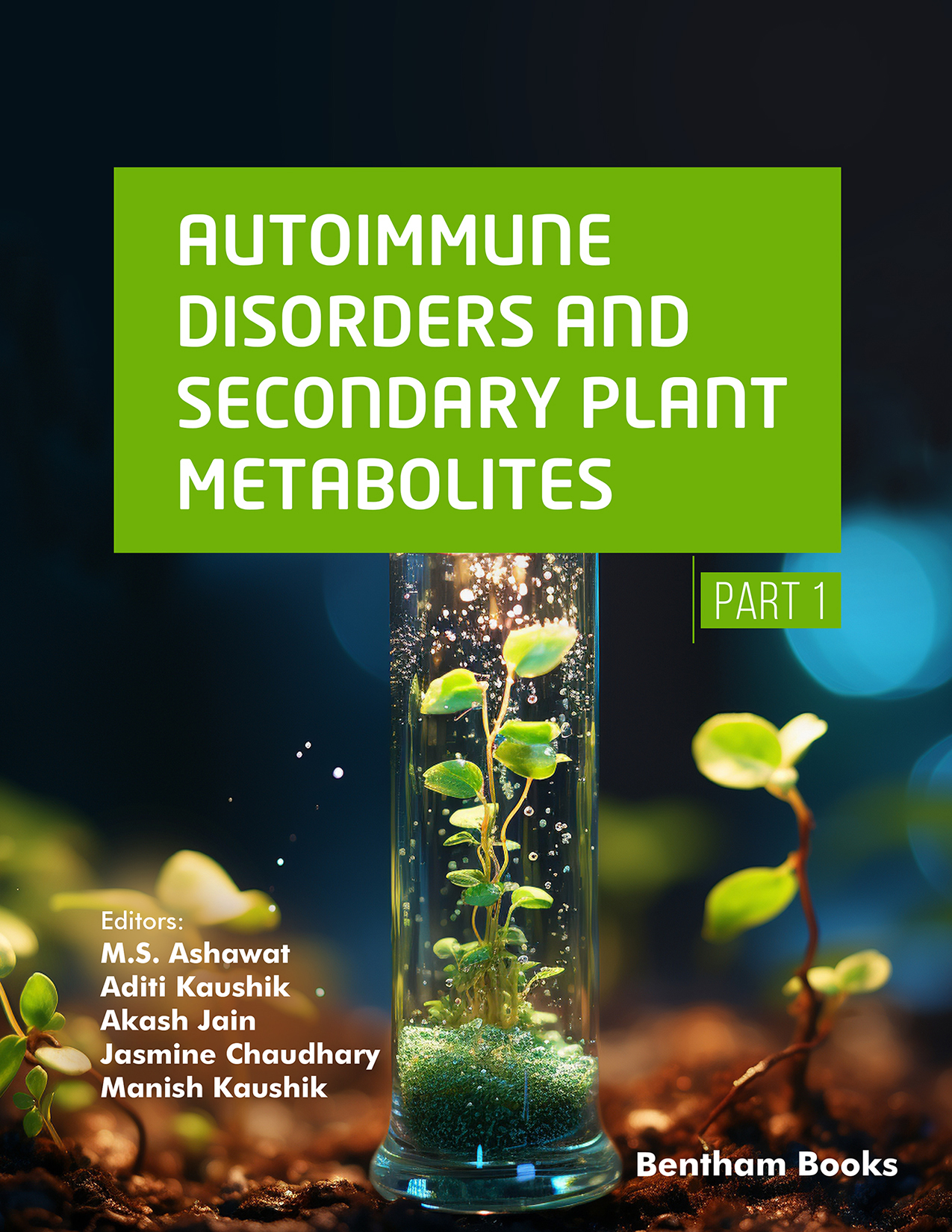
Autoimmune Disorders and Secondary Plant Metabolites (Part 1)

Editors: MS. Ashawat, Dr. Aditi Kaushik, Akash Jain, Jasmine Choudhry, Manish Kaushik

Autoimmune Disorders and Secondary Plant Metabolites (Part 1)

ISBN: 979-8-89881-235-5
eISBN: 979-8-89881-234-8 (Online)

Introduction

Autoimmune Disorders and Secondary Plant Metabolites provides a crisp overview of immune system dysfunction, then examines the therapeutic potential of medicinal plants in managing major autoimmune and immune-related disorders such as Type 1 Diabetes, Multiple Sclerosis, Psoriasis, Systemic Lupus, Vitiligo, and Hashimoto’s Thyroiditis. Each chapter identifies disease-specific phytochemicals, explains mechanisms of action, and highlights emerging plant-based pharmacotherapy strategies, while linking traditional pharmacology with modern molecular and diagnostic advances.

Key Features

  • - Provides disease-wise phytochemical insights.
  • - Explains immunomodulatory mechanisms using plant bioactive compounds.
  • - Bridges traditional and molecular pharmacology concepts.
  • - Presents evidence through simplified tables and visuals for comparison.

Target Readership:

Designed for postgraduate and PhD students, researchers, and faculty in pharmaceutical sciences, pharmacognosy, and immunology.

Foreword

The contents of the book “Autoimmune disorders and Secondary Plant Metabolites” have been read in detail by me and it contains highly useful information on the important functions of the secondary plant metabolites in the management of various autoimmune disorders. The editors of this book are the experts who have been working in the field of Pharmaceuticals for years and are known in the subjects of their specializations. Their focused and multidisciplinary approach aims to introduce the basic insights of the book and emphasizes the comprehensive use of the secondary plant metabolites.

All the chapters have been authored by a group of dedicated academicians and scientists who actively engaged in the field of the design and development of novel pharmaceuticals in the management of different autoimmune disorders. As a medical expert for more than 20 years, I foresee that this book will be of great value not only to postgraduates, teachers and research scholars in the field of Pharmaceuticals, but also to the industrial and scientific communities. This work contains substantial data for emphasizing herbal therapeutics as one the newer approach for the design and development of novel pharmacophore and their derivatives in the management of various autoimmune disorders.

In this post-COVID era, phytotherapy would be effectively utilized for the treatment of various diseases more effectively. The overall detail of the subject by the various authors in the different chapters of this book would go a long way in throwing new light on the area of autoimmune disorders.

I sincerely hope this venture is a great success, as it reflects the devotion, dedication and hard work of the team of editors. I am confident that this book will be very useful and gain enough attention from research scholars and academicians working in the field of medical and pharmaceuticals.

May the spirit of discovering better future remedies and optimizing phytopharmaceuticals provide superior medication to the benefit of humanity.

Nor Farid Bin Mohd Noor
Faculty of Medicine
Universiti Sultan Zainal Abidin (UniSZA)
Medical Campus, Jalan Sultan Mahmud
Kuala Terengganu 20400, Terengganu
Malaysia