
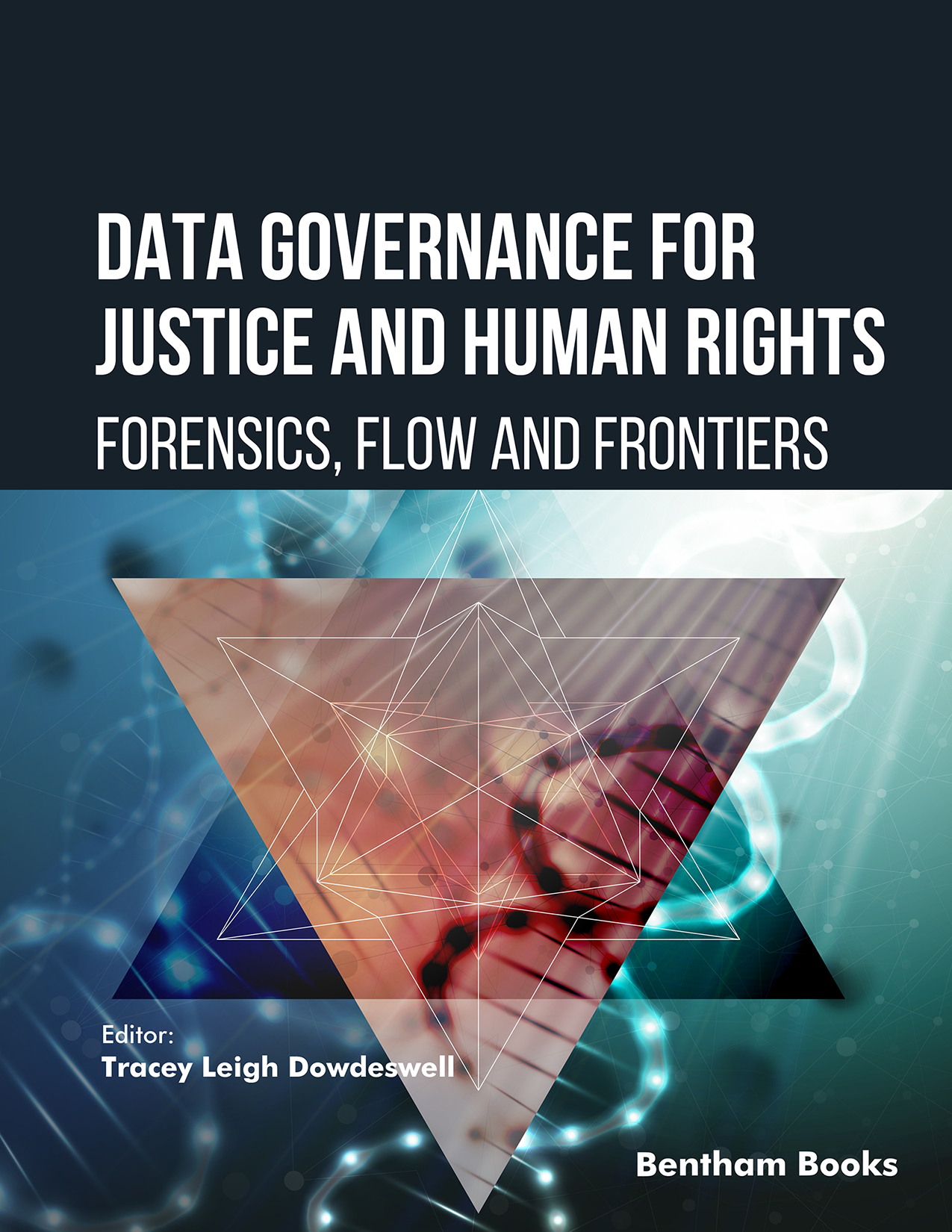
Data Governance for Justice and Human Rights: Forensics, Flow and Frontiers

Editor: Dr. Tracey Leigh Dowdeswell

Series Title: Current and Future Developments in Law

Data Governance for Justice and Human Rights: Forensics, Flow and Frontiers

Volume 4

ISSN: 2589-0115
eISSN: 2589-0107 (Online)
ISBN: 979-8-89881-226-3
eISBN: 979-8-89881-225-6 (Online)

Introduction

Data Governance for Justice and Human Rights: Forensics, Flow and Frontiers examines the historical development and current applications of data in legal decision-making, including AI-driven fact-finding and evidence-based argumentation. It also addresses the governance of legal data, tackling challenges such as AI-generated misinformation, forensic bioinformatics, and cognitive biases in forensic science. Finally, it highlights novel forensic applications, particularly in bioinformatics for human identification.


Key Features

  • - Comprehensive coverage of data-driven approaches in law and justice.
  • - Focus on AI, machine learning, and statistical methods in forensic applications.
  • - Explores governance, ethics, and strategies for reliable legal data use.
  • - Case studies and real-world examples linking theory to practice.

Target Readership:

Scholars, researchers, and practitioners in data science, AI, bioinformatics, law, and forensic science.

Preface

I am very pleased to have been involved in this project and to help bring about this volume at a very exciting time in which data science, bioinformatics, and artificial intelligence are transforming our legal and criminal justice systems.

I would like to thank our editors at Bentham Science Books, including Humaira Hashmi and Areeba Tanveer, for all their efforts in bringing this volume to completion.

I would also like to thank the following contributors for their excellent and diverse contributions to this book: Bruce Budowle, James French, Jianye Ge, Sean Goltz, Ellen Greytak, Swathi Ashok Kumar, Ruth Morgan, Taryn Mulvihill, Sherry Nakhaeizadeh, Karen Richmond McGregor, Antti Sajantila, Zhao Yuxin, and John Zeleznikow.

I would also like to thank each of our outstanding contributors, as well as our peer reviewers, including CeCe Moore, for taking the time to review this work and for their helpful suggestions.

I am deeply grateful to all of you for the role you have played, not only in this work, but also for your contributions to the field as a whole. It is only with the contribution of such esteemed scholars that we were able to create this book.

Tracey Leigh Dowdeswell
Department of Humanities & Social Sciences
Douglas College, 700 Royal Avenue
New Westminster, BC V3M 5Z5, Canada