
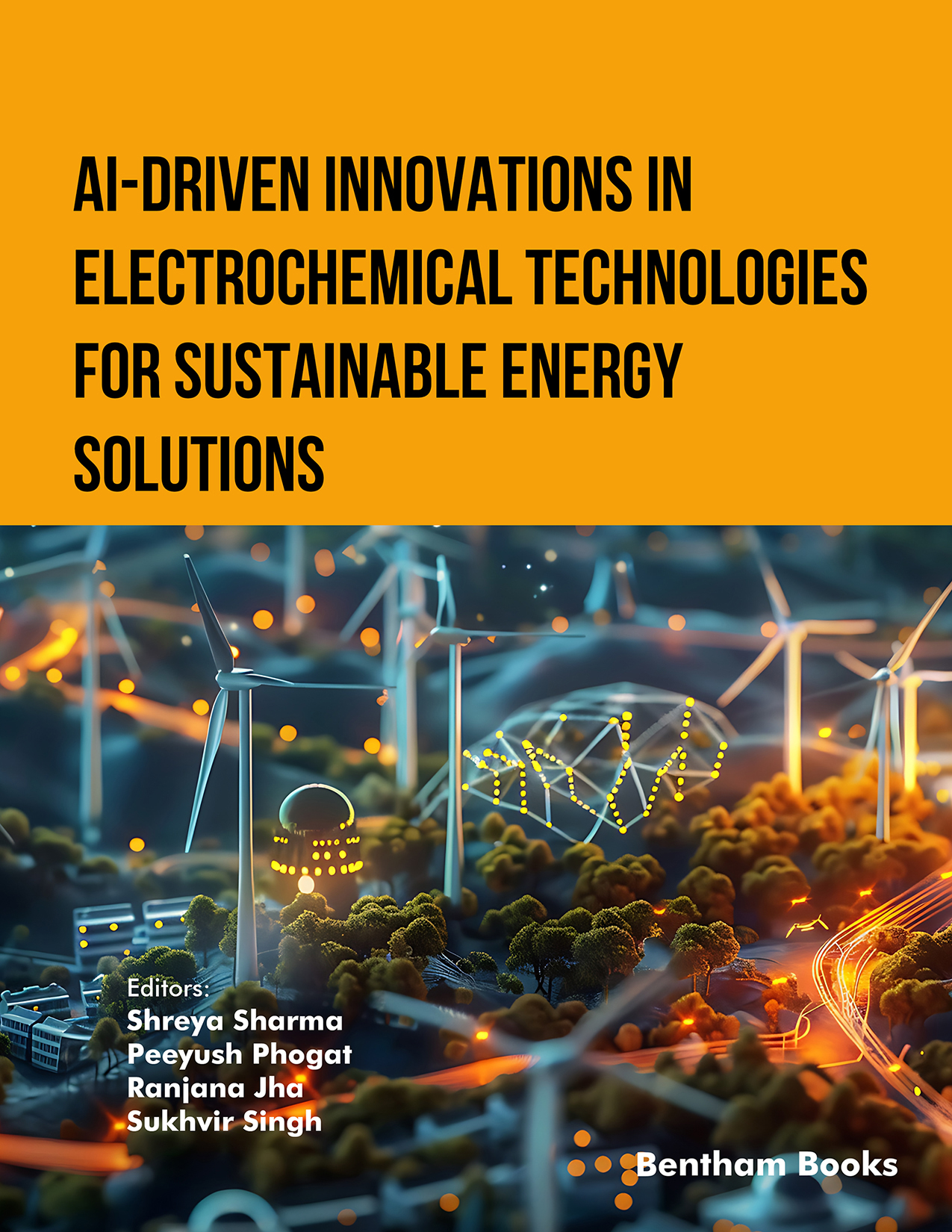
AI-Driven Innovations in Electrochemical Technologies for Sustainable Energy Solutions

Editors: Shreya Sharma, Peeyush Phogat, Ranjana Jha, Sukhvir Singh

AI-Driven Innovations in Electrochemical Technologies for Sustainable Energy Solutions

ISBN: 979-8-89881-187-7
eISBN: 979-8-89881-186-0 (Online)

Introduction

AI-Driven Innovations in Electrochemical Technologies for Sustainable Energy Solutions blends principles of data science, materials engineering, and energy technology to offer a forward-looking exploration of how Artificial Intelligence is reshaping the design, optimisation, and performance of electrochemical technologies.

Across nine well-structured chapters, the book progresses from foundational principles of AI-integrated electrochemical systems to advanced applications in batteries, fuel cells, supercapacitors, and electrolysers. Topics include AI-assisted materials discovery, performance optimisation, real-time monitoring, predictive maintenance, and system-level energy management. Ethical, environmental, and policy considerations surrounding AI adoption are also examined, along with case studies that demonstrate real-world impact.

With its interdisciplinary perspective and emphasis on practical innovations, this book equips readers with a deep understanding of how AI reduces experimentation time, streamlines design processes, and drives next-generation sustainable energy solutions.

Key Features

  • - Comprehensive coverage of AI-enhanced electrochemical systems.
  • - Real-world case studies and application-driven insights.
  • - Focus on AI-assisted material discovery, optimisation, and predictive maintenance.
  • - Discussions on the ethical, environmental, and policy dimensions.
  • - Forward-looking perspectives on integrating AI with sustainable energy and healthcare technologies.

Target Readership:

Researchers, scientists, graduate students and industry professionals in electrochemistry, materials science, renewable energy, and AI.

Preface

The need for sustainable energy solutions has never been more pressing as the world grapples with the realities of climate change, resource depletion, and the imperative to reduce carbon emissions. Electrochemical technologies, especially those involved in energy storage, conversion, and utilization, play a pivotal role in the transition toward a cleaner and more sustainable energy future. The advent of Artificial Intelligence (AI) has brought a paradigm shift to this domain, offering unprecedented opportunities to enhance efficiency, optimize performance, and unlock innovative breakthroughs.

AI-Driven Innovations in Electrochemical Technologies for Sustainable Energy Solutions is an exploration of this transformative synergy between AI and electrochemical systems. This book explores the ways in which AI, machine learning, and advanced data analytics are transforming the design, development, and deployment of energy technologies. From optimizing battery systems to designing novel materials for energy storage and conversion, the integration of AI has the potential to accelerate innovation and efficiency in this field.

The chapters in this book offer insights into a wide range of topics, including the application of AI in the synthesis of advanced energy materials, optimization of energy storage devices such as batteries and supercapacitors, and the integration of renewable energy sources with grid storage. Drawing on both academic research and professional experience, the authors of this book aim to provide a comprehensive understanding of how AI can enhance electrochemical technologies while addressing the challenges associated with energy sustainability. This book is structured to present both fundamental and advanced concepts, making it suitable for a broad audience, including students, researchers, industry professionals, and policymakers. It provides an interdisciplinary perspective that connects the worlds of electrochemistry, AI, and sustainability. The inclusion of case studies and practical examples ensures that readers can appreciate not only the theoretical underpinnings but also the real-world applications of these technologies.

Throughout this journey, the authors have been fortunate to collaborate with numerous exceptional colleagues, mentors, and experts. All of the co-editors have contributed significantly to the development of this book. Their expertise, guidance, and unwavering commitment to advancing knowledge in their respective fields have been invaluable. This book also serves as a call to action, urging researchers, engineers, and policymakers to embrace AI-driven innovations as part of their efforts to solve the energy challenges of our time. The future of sustainable energy lies at the intersection of cutting-edge technologies and interdisciplinary collaboration, and AI is at the heart of this transformation.

We hope this work inspires readers to explore the vast potential of AI in the field of electrochemical technologies and to contribute to the development of solutions that will power a sustainable, energy-efficient future for generations to come.

Shreya Sharma, Peeyush Phogat
Ranjana Jha & Sukhvir Singh

Research Lab for Energy Systems
Department of Physics
Netaji Subhas University of Technology
Dwarka, New Delhi, India